Choosing the right China supplier for global measurement projects requires more than comparing prices. A dependable Digital Panel Gauge supplier should combine manufacturing experience, technical knowledge, and clear quality procedures. Buyers often need gauges for pressure, temperature, level, or process monitoring. Each application demands careful attention to range, accuracy, display visibility, connection type, and operating environment.
A professional supplier should explain specifications in practical terms. For example, a factory floor may require a bright LED display, stainless-steel housing, and protection against dust or moisture. Calibration records, inspection reports, product drawings, and traceable test data can help buyers evaluate reliability. Responsive engineering support also matters when a standard model does not fit a panel opening or control system.
Details matter.
Experienced manufacturers may offer OEM customization, sample testing, stable production capacity, and export documentation. However, no supplier should be judged by brochures alone. Buyers should review actual samples, production controls, after-sales communication, and evidence of consistent performance. Even experienced purchasers can overlook connector quality or display readability under strong sunlight.
This guide examines how to identify China’s best Digital Panel Gauge supplier for global buyers. It considers product design, quality assurance, customization, communication, and long-term service. The evaluation remains practical, because a perfect supplier does not exist. A reliable partnership grows through verified information, honest discussion, and measurable results.
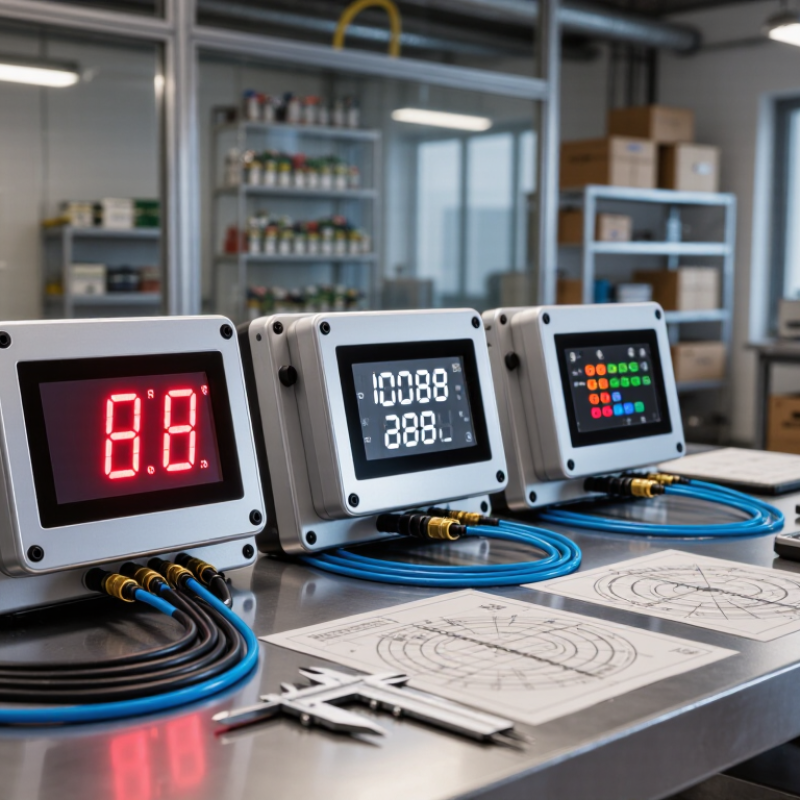
Digital Panel Gauges: Definition, Functions, and Main Applications
A digital panel gauge measures pressure, temperature, voltage, or other process values. It displays readings on an electronic screen for quick interpretation. Unlike analog instruments, it reduces parallax errors and supports clearer readings in dim workshops. Many models offer selectable units, peak-value memory, alarm outputs, and programmable limits. These functions help operators monitor equipment without opening the control cabinet.
Digital panel gauges appear in hydraulic systems, air compressors, water treatment equipment, laboratory benches, and factory automation lines. A pressure gauge may show pump conditions, while a temperature version can track ovens or storage rooms. In my experience, accurate installation matters as much as the gauge itself. Incorrect wiring, vibration, or unsuitable pressure ranges can produce unstable results. Calibration records and clear datasheets improve traceability. However, no gauge is perfect. Display resolution may look impressive, yet sensor accuracy still controls the final result.
Tips: Match the measuring range to normal operating conditions, not only the maximum value. Check signal type, mounting size, power supply, protection rating, and process connection. Ask for calibration evidence when measurements affect safety or quality. Test the gauge under real operating conditions before full deployment. This step often reveals heat, vibration, or reading-delay problems early.
Digital panel gauges commonly convert standardized 4–20 mA industrial signals into a readable process value. In a linear range, 4 mA represents 0%, 12 mA represents 50%, and 20 mA represents 100% of the configured measurement span.
When selecting a digital panel gauge, accuracy should lead the comparison. Check the stated accuracy, resolution, repeatability, and calibration conditions. A display reading of 0.1 units means little if sensor uncertainty reaches 0.5 units. NIST Technical Note 1297 recommends reporting measurement uncertainty with clear confidence information. Ask suppliers for calibration records, not only brochure figures.
Input compatibility matters just as much. Confirm voltage, current, thermocouple, resistance, or pulse input ranges before ordering. Sampling speed also affects unstable processes. A slow gauge may hide pressure spikes or temperature changes. For factory panels, compare display height, viewing angle, refresh rate, alarm outputs, and communication options. The IEC 60529 IP code helps buyers evaluate protection against dust and water. However, an IP rating does not prove vibration resistance. That detail is often overlooked.
Tips: Request a sample unit and test it with your actual sensor. Check readings during cold starts, electrical noise, and power interruptions. The 2024 industrial automation market data from Grand View Research indicates continued expansion in automated equipment, increasing demand for dependable retrofit instruments. Still, market growth does not guarantee quality. I would also compare five-year support, spare availability, and firmware stability. A perfect specification sheet can fail in a humid control cabinet.
Evaluating a Chinese digital panel gauge supplier requires more than comparing unit prices. The 2024 Industrial Automation Market report projects the sector to reach about USD 442 billion by 2029. This growth increases pressure on suppliers to deliver stable, repeatable measurements. Ask for test records covering display accuracy, response time, overload protection, and performance across temperature changes.
A reliable supplier should provide calibration certificates linked to traceable reference instruments. The ISO Survey 2022 recorded more than 1.2 million ISO 9001 certificates worldwide, but certification alone proves little. Request the certificate scope, audit date, and corrective-action records. Check whether production samples match the approved drawing. Small differences in terminal layout can delay installation.
Use a sample before signing a large order. Test it at room temperature, then repeat the reading after several hours of continuous operation. Test it cold. Review ingress protection, insulation safety, electromagnetic compatibility, and applicable IEC 61010 requirements. Ask for material declarations when shipments enter regulated markets. A polished document package may still hide weak calibration discipline. That is an uncomfortable risk. Supplier evaluation should include response speed, replacement policy, firmware control, and lot-to-lot consistency, not only factory photos or a low quotation.
A reliable digital panel gauge supplier begins with controlled manufacturing, not attractive specifications. Engineers should verify sensor compatibility, display clarity, enclosure strength, and electrical stability during production. Each unit needs traceable components and documented inspection results. Small details matter, especially terminal fit and screen visibility under uneven factory lighting.
Customization should solve a measured problem. Buyers may request pressure ranges, engineering units, alarm outputs, communication interfaces, or special mounting dimensions. A capable supplier reviews drawings, operating conditions, and sampling requirements before production. Prototype testing can reveal practical issues, such as unreadable digits behind tinted panels or unstable readings near vibrating equipment. These findings deserve correction, not excuses.
Certification supports confidence, but certificates alone do not prove consistent quality. Suppliers should maintain calibration procedures, electrical safety testing, electromagnetic compatibility checks, and production records. Applicable standards may vary by market and product design, so technical files must match the delivered gauge. Factory audits and sample rechecks add useful evidence. No manufacturing process is perfect. A sensor can drift, and a connector can fail earlier than expected. Honest suppliers track these problems, investigate causes, and improve inspection plans. Clear reports, repeatable testing, and responsive technical support help global buyers make safer purchasing decisions.
Global buyers need more than a low quote when selecting a digital panel gauge supplier in China. Check measurement range, display resolution, input type, enclosure material, and calibration records. Ask for a sample before placing a larger order. Test it with your actual equipment. Small details matter.
Shipping advice should be specific. Confirm the production schedule, packing method, shipping term, and export documents in writing. A reliable supplier should use protective foam, moisture-resistant bags, and strong outer cartons. Request carton dimensions and gross weight before booking freight. This helps your forwarder calculate costs accurately. Air freight suits urgent samples, while sea freight usually fits larger orders. Delays still happen.
Do not ignore after-sales support. Ask how technical questions are handled, how quickly replacement parts ship, and whether operating instructions are available in clear English. Keep photos of labels, wiring, and packaging during inspection. These records make problem solving easier. Experienced purchasers also compare total landed cost, not only unit price. Include freight, duties, testing, spare units, and possible rework. A very cheap offer may hide weak calibration control or limited support. I would not approve a supplier from polished pictures alone. Factory videos can be staged. A live inspection or independent pre-shipment check gives stronger evidence. Even then, my first order would remain modest. That caution can feel slow, but it protects the budget.
| Category | Data Dimension | Typical Market Range or Requirement | Purchasing Advice for Global Buyers |
|---|---|---|---|
| Product Function | Measured parameters | Voltage, current, frequency, power, temperature, pressure, process signals, and resistance | Confirm the input signal, measuring range, wiring method, display unit, and whether AC or DC measurement is required. |
| Display | Digit count and readability | Common configurations include 3½, 4, 4½, and 4¾ digits; LED displays are widely used for industrial panels | Choose red, green, or white digits according to viewing distance, ambient light, and control-cabinet design. |
| Accuracy | Measurement accuracy | Many industrial digital panel meters specify approximately ±0.1% to ±0.5% of full scale, depending on input type and model | Request the complete accuracy formula, calibration conditions, temperature coefficient, and test certificate before purchase. |
| Installation | Panel cutout and mounting | Common panel sizes include approximately 24 × 48 mm, 48 × 48 mm, 48 × 96 mm, and 96 × 96 mm; exact cutout dimensions vary | Approve a dimensional drawing before production and check rear clearance, terminal orientation, and mounting hardware. |
| Electrical Supply | Auxiliary power options | Common options include 5 V DC, 12 V DC, 24 V DC, 85–265 V AC, or universal AC/DC designs | Match the gauge to the actual control-panel supply and verify isolation between auxiliary power and measurement input. |
| Protection | Ingress and environmental protection | Front-panel protection may range from basic indoor protection to IP65-rated designs when properly installed with a suitable seal | Ask whether the stated IP rating applies to the front panel only or to the complete installed product. |
| Communication | Data interface and outputs | Optional features may include relay alarm outputs, 4–20 mA or 0–10 V retransmission, RS-485, and Modbus RTU | Confirm protocol settings, register maps, output isolation, alarm capacity, and connector type before ordering. |
| Compliance | Technical documentation | Typical documents include datasheets, user manuals, wiring diagrams, declarations of conformity, and test or calibration records | Request documents applicable to the destination market; do not assume that a general compliance mark covers every installation. |
| Sampling | Pre-production verification | A sample is normally used to verify display visibility, dimensions, terminal layout, signal accuracy, and communication performance | Use a signed sample approval or inspection checklist before approving a larger purchase order. |
| Production | Lead-time planning | Standard stock items may ship faster; customized scales, labels, wiring, or firmware generally require additional production time | Obtain a written lead time for samples, standard orders, customized orders, and replenishment quantities. |
| Shipping | Transport method | Courier or air freight suits samples and small consignments; sea freight is generally more economical for larger-volume shipments | Compare total landed cost, including product price, packaging, freight, insurance, duties, taxes, and destination handling fees. |
| Trade Terms | Incoterms and payment | Common international terms include EXW, FOB, CIF, and DAP; payment arrangements vary by order size and supplier agreement | State the Incoterms version, named place, payment milestones, inspection rights, and responsibility for import clearance. |
| Packaging | Transit protection | Individual protective packaging, moisture protection, shock-resistant cartons, and export labels are commonly used for electronic instruments | Specify carton markings, quantity per carton, spare units, barcodes, and packaging tests for long-distance transport. |
| Technical Support | After-sales service | Useful support includes wiring review, parameter configuration, troubleshooting, replacement guidance, and digital manuals | Define response channels, support hours, spare-part availability, warranty duration, and the procedure for defective units. |
| Quality Control | Inspection checkpoints | Recommended checks include appearance, dimensions, display operation, input accuracy, insulation, alarm output, communication, and labeling | Use a documented inspection plan and retain batch records, serial numbers, calibration data, and final test results. |
Note: The ranges above describe common industry practices for digital panel gauges. Final specifications, compliance requirements, lead times, and shipping costs should be confirmed in the quotation and technical documentation for each order.
It measures pressure, temperature, voltage, or other process values. The electronic screen shows readings clearly. It reduces parallax errors. It can also offer alarms, unit selection, and peak-value memory.
They support hydraulic systems, air compressors, water treatment equipment, and laboratory benches. Factory automation lines use them too. A pressure model may monitor a pump. A temperature model may track an oven or storage room.
Compare accuracy, resolution, repeatability, input type, and sampling speed. Check display size and viewing angle. Confirm the power supply and mounting dimensions. A large display cannot fix an inaccurate sensor.
Match the range to normal operating conditions. Do not choose only by the highest possible value. A gauge with excessive range may lose useful detail. Actual testing is better.
Incorrect wiring can create unstable readings. Vibration may disturb the display. Heat, electrical noise, and unsuitable pressure ranges also cause trouble. Check the process connection carefully. Small errors matter.
No. A protection rating mainly indicates resistance to dust and water. It does not automatically prove vibration resistance. Consider humidity, cabinet temperature, and mechanical movement separately. The rating is useful, but incomplete.
Request a sample unit and calibration records. Test it with the actual sensor. Check cold starts, power interruptions, and unstable process conditions. Compare readings during real operation. A brochure may look perfect. That is not enough.
Confirm production time, packing materials, shipping terms, export documents, carton size, and gross weight. Protective foam and moisture-resistant bags reduce transit risks. Air freight suits urgent samples. Sea freight often suits larger orders. Delays still happen.
Include freight, duties, testing, spare units, and possible rework. Ask about technical support and replacement-part timing. Request clear operating instructions. A low unit price may hide weak calibration control. I would keep the first order modest. Caution can feel slow.
A Digital Panel Gauge is a compact electronic instrument used to display measured values such as pressure, temperature, voltage, current, flow, or speed in a clear digital format. Its accuracy, readability, response time, display type, input compatibility, power supply, installation size, and environmental protection rating are important specifications to compare before purchase. Selecting the right model requires matching the gauge with the application, operating conditions, and required measurement range.
For global buyers, evaluating a China-based supplier should include manufacturing capability, quality control procedures, product testing, customization services, and relevant certification standards. A reliable supplier should be able to provide stable production, accurate technical documentation, flexible panel or signal configurations, and consistent quality for bulk orders. Buyers should also confirm packaging, shipping arrangements, lead times, warranty terms, technical support, and after-sales communication. Careful comparison of specifications, production quality, compliance, and service can help customers secure a suitable Digital Panel Gauge for industrial equipment, control systems, laboratories, and other professional applications.

Dongou