China Best Dashboard Gauge Cluster Manufacturers?

Time:2026-09-26 Author:Sienna
0%

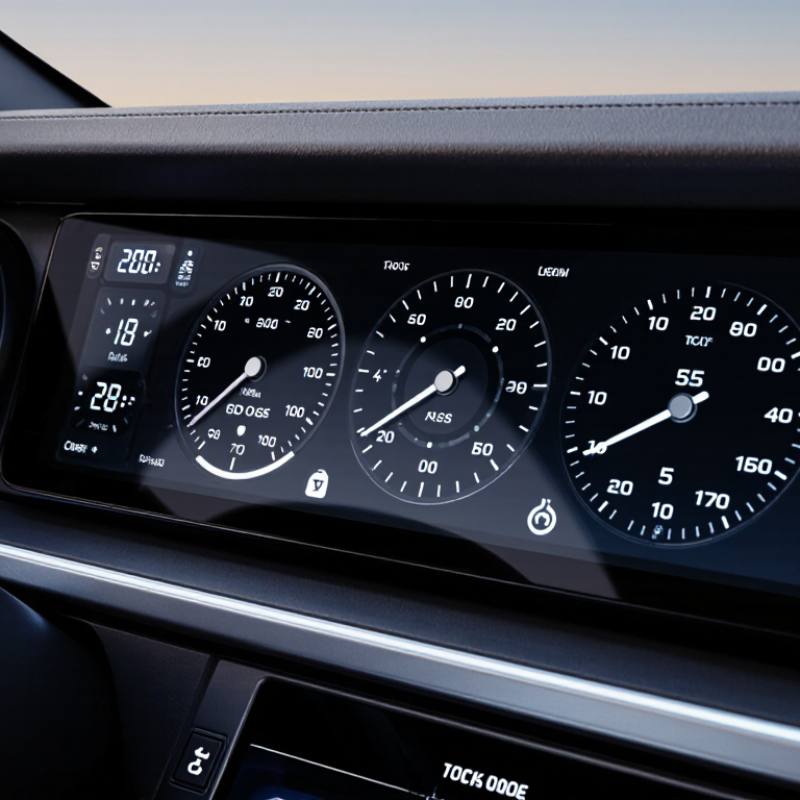
Choosing China’s best Dashboard Gauge Cluster manufacturers requires more than comparing prices or polished product photos. A reliable supplier must combine optical clarity, accurate vehicle data, durable materials, and disciplined quality control. The cluster sits directly in the driver’s sightline. A delayed warning, dim display, or unreadable symbol can quickly become a serious usability concern.

Automotive HMI specialist Dr. Mark Boyadjis has emphasized, “The right information must reach the driver at the right time.” This principle remains practical when evaluating Chinese manufacturers. Strong companies usually provide test records, prototype support, CAN communication expertise, and traceable production processes. Their engineers should explain brightness testing, viewing angles, vibration resistance, temperature cycling, and software validation in clear language. Details matter. Even a small icon can influence driver confidence.

Factory visits and sample inspections reveal what brochures hide. Look closely at connector sealing, lens reflections, backlight uniformity, and the fit between the bezel and housing. Ask whether the Dashboard Gauge Cluster supports customized graphics, warning strategies, and regional vehicle requirements. Certification evidence should be current and independently verifiable. However, no supplier is perfect. Some manufacturers may offer impressive hardware but weaker documentation or slow engineering feedback. That weakness deserves honest consideration.

The best choice depends on the vehicle program, production volume, budget, and expected service life. A careful comparison should include engineering communication, after-sales support, software ownership, and delivery consistency. China has capable cluster manufacturers, but capability is not automatically reliability. Buyers must test, question, and verify before making a final decision.
China Best Dashboard Gauge Cluster Manufacturers?

Dashboard Gauge Clusters: Functions, Types, and Automotive Applications

China Best Dashboard Gauge Cluster Manufacturers?

Dashboard gauge clusters have evolved from simple speed displays into compact vehicle information systems. They show speed, engine speed, fuel level, battery status, warnings, navigation, and driver-assistance alerts. Analog clusters remain practical and low-cost. Hybrid clusters combine physical gauges with a central screen. Fully digital clusters offer flexible layouts, software updates, and sharper graphics.

According to MarketsandMarkets, the automotive display market is projected to grow from about USD 18 billion in 2023 to more than USD 30 billion by 2028. This growth supports demand for digital instrument clusters. Omdia also reports continued expansion in large automotive display shipments, especially for electric vehicles. These figures show a clear shift toward software-defined dashboards, but screen size alone does not prove quality.

Passenger cars often use digital clusters for navigation and ADAS information. Commercial vehicles need durable displays, clear warnings, and long operating hours. Electric vehicles require battery range, charging status, energy use, and regenerative braking data. A reliable China-based manufacturer should verify luminance, temperature resistance, CAN communication, EMC performance, and lifecycle testing. Field experience matters here. A bright screen can still distract drivers. Some suppliers focus too heavily on visual effects, which deserves reconsideration. Readability comes first. During testing, engineers should check glare at noon, low visibility at night, and warning clarity under vibration. Quality is not perfect by default. It must be measured repeatedly.

China’s Leading Cluster Manufacturers: OEM Expertise and Product Range

China Best Dashboard Gauge Cluster Manufacturers?

China’s Leading Cluster Manufacturers: OEM Expertise and Product Range

Leading Chinese cluster manufacturers support OEM programs for passenger vehicles, commercial fleets, and electric platforms. Product ranges can include LCD, TFT, and hybrid displays, with warning indicators and vehicle data interfaces. OEM expertise goes beyond appearance. It includes requirements review, prototype builds, environmental testing, and production controls. Ask how suppliers check readability in bright sunlight, resistance to vibration, and communication with vehicle networks. Evidence matters more than catalog breadth.

Small details matter. A sharp graphic can still be hard to read through a steering wheel. Compare screen size, viewing angle, operating temperature, connector layout, software options, and service support. Request sample units and test them in the intended cabin, not only in a showroom. Clarify engineering-change procedures and production traceability. Some specifications look reassuring on paper; vehicle testing may reveal gaps.

Tips: Share the vehicle specification and installation drawing early. Confirm interfaces, mounting points, display behavior, test evidence, and revision control before approval. Leave time for a prototype review. It may expose overlooked assumptions, though that feedback is not always convenient.

How Clusters Receive Vehicle Data: CAN 2.0’s 1 Mbit/s Maximum Bit Rate

China Best Dashboard Gauge Cluster Manufacturers?

How Clusters Receive Vehicle Data: CAN 2.0’s 1 Mbit/s Maximum Bit Rate

A dashboard gauge cluster typically receives speed, engine speed, temperature, and warning data through CAN frames. CAN 2.0 supports a maximum bit rate of 1 Mbit/s, as defined by ISO 11898-1. Its standard data field carries up to eight bytes. That seems small, but it suits compact vehicle signals.

The bus does not deliver every frame instantly. Arbitration gives priority to the frame with the dominant identifier. A safety-related warning can therefore transmit before a less urgent display update. CiA technical guidance notes that cable length, network loading, and bit timing affect real performance. At 1 Mbit/s, wiring is commonly limited to about 40 metres under suitable conditions. The actual vehicle network may operate below its theoretical limit.

In practical cluster testing, engineers check the CAN trace before blaming the display hardware. A missing speed value may come from an incorrect identifier, byte order, or scaling factor. It may not be a faulty gauge. I still find this assumption too common. A CAN frame carrying 100 km/h might encode 1000, depending on the signal definition. Engineers should verify the database, termination resistance, and oscilloscope waveform together. CiA 301 documentation also shows why application-layer conventions matter. CAN 2.0 provides transport reliability, but it does not define every vehicle signal. That boundary is easy to overlook.

How CAN 2.0 Frames Use the 1 Mbit/s Maximum Bit Rate

A classical CAN 2.0 data frame can carry up to 8 data bytes. At the maximum nominal bit rate of 1 Mbit/s, the estimated transmission time increases with payload size. Values shown exclude variable bit stuffing and error-frame retransmissions.

Frame calculation uses a standard 11-bit identifier: 1 SOF + 12 arbitration bits + 6 control bits + payload + 16 CRC/ACK bits + 7 EOF bits + 3 intermission bits.

Safety Requirements: ISO 26262 Defines Four ASIL Levels, A Through D

A reliable dashboard gauge cluster begins with a disciplined ISO 26262 safety process. The standard defines four Automotive Safety Integrity Levels, from ASIL A to ASIL D. ASIL A represents the lowest risk reduction requirement. ASIL D demands the strongest controls and evidence.

For manufacturers, the correct ASIL depends on hazard analysis, exposure, controllability, and potential severity. A speed display failure may create different risks than a missing warning indicator. Engineers should document safety goals, hardware metrics, diagnostic coverage, and software verification throughout development. Independent reviews and traceable test records also strengthen reliability.

In practice, suppliers need more than attractive screens and precise needles. They need fault detection, controlled fallback behavior, stable communication, and clear production testing. Small gaps can matter.

Tips

Ask manufacturers for an ISO 26262 development process, not only a compliance statement. Request sample safety documentation, test methods, failure-response details, and evidence of configuration control. Check whether the cluster supports warning prioritization and safe behavior during sensor or network faults.

Do not assume every feature requires ASIL D. Overengineering can increase cost and complexity. Underestimating risk is worse. A practical evaluation should include vibration, temperature cycling, electromagnetic interference, startup delays, and power interruptions.

Field experience helps, but it can also reveal uncomfortable assumptions. Safety decisions should remain evidence-based.

How to Evaluate Suppliers: Compliance, Validation, Customization, and Support

Selecting a dashboard gauge cluster manufacturer takes more than comparing prices and screen sizes. Check whether the supplier can provide compliance documents for your target markets, with clear model coverage and current test records. Ask for evidence. A certificate alone may not show how the finished cluster performs in your vehicle. Request validation results for vibration, temperature changes, electromagnetic compatibility, and display readability under direct sunlight. Confirm the test conditions match your intended use. Details matter.

Customization should be discussed before tooling or software work begins. Share interface requirements, warning-light behavior, connector drawings, and data protocols, then ask how changes are reviewed and documented. A practical supplier will explain limitations, not promise that every feature is easy. Support matters after delivery, too. Ask about firmware updates, defect reporting, spare units, and response times. Request a named technical contact and sample service records, where available. One point is easy to overlook: prototypes can pass tests while production units vary. Agree on inspection criteria and traceability for each batch. No checklist catches everything, so keep a written record of open questions and revisit them before approval.

China Best Dashboard Gauge Cluster Manufacturers? - How to Evaluate Suppliers: Compliance, Validation, Customization, and Support

Use this evidence-based checklist to compare suppliers consistently. Requirements depend on the vehicle, destination market, and customer specifications; confirm applicability with your engineering and compliance teams.

Evaluation Area What to Check Evidence to Request Practical Acceptance Check Suggested Weight Evaluation Notes
Quality management Check the quality system, certified site, certificate scope, and expiry date. IATF 16949 may be relevant for automotive production; ISO 9001 is a general quality management system standard. Current certificate, issuing-body details, site address, scope, and recent audit or corrective-action records. Verify the certificate with its issuer and confirm that the named site and activities cover the proposed work. 15% Record the audit date, open findings, and closure evidence.
Regulatory compliance Identify requirements for each target market and vehicle program. UNECE Regulation No. 10 may apply to electromagnetic compatibility; requirements vary by product and market. Applicable approvals or test reports, report numbers, product configurations, and supporting technical documentation. Match report scope, hardware and software versions, and installation conditions to the proposed gauge cluster. 15% Do not treat a standard or approval as universally required; confirm with the customer and relevant authority.
Design validation Review validation planning for display readability, operating temperature, vibration, electrical behavior, and other vehicle-specific conditions. ISO 16750 describes environmental conditions and testing for road-vehicle electrical and electronic equipment. Validation plan, test procedures, results, sample configuration, acceptance limits, and nonconformance records. Confirm tests reflect the agreed requirements and that failures, retests, and design changes are traceable. 15% Check test coverage against the program specification rather than relying on a generic pass statement.
EMC performance Assess emissions and immunity requirements for the vehicle and destination market. CISPR 25 is commonly referenced for radio disturbance characteristics of vehicle components, when specified by the program. Laboratory reports, test setup, limits used, hardware revision, and any deviations or corrective actions. Check that the tested configuration and test limits correspond to the customer’s EMC specification. 10% Ask whether testing was performed by an independent laboratory or in-house, and review the underlying results.
Customization capability Evaluate display size and layout, graphics, languages, warning telltales, connectors, mounting, communications interfaces, and vehicle data integration. Requirements review, interface-control documents, sample designs, change process, and prototype schedule. Confirm ownership and approval points for specifications, graphics, interface changes, and design revisions. 15% Request a documented feasibility review for each non-standard requirement.
Software and cybersecurity process Review software requirements, version control, release management, defect handling, and cybersecurity activities relevant to the product and vehicle program. ISO 26262 applies when functional-safety requirements are in scope; it is not a blanket requirement for every cluster. Development lifecycle documents, software change records, version history, cybersecurity evidence, and safety work products where applicable. Confirm that software releases are identifiable, reviewable, and linked to the tested hardware and requirements baseline. 10% Define applicable safety and cybersecurity obligations with the vehicle program before supplier selection.
Production and traceability Check process controls, component traceability, inspection plans, calibration, change control, and production-readiness planning. Process flow, control plan, inspection records, traceability example, capacity plan, and production-change procedure. Trace a sample unit from finished product to key components, production lot, and relevant inspection records. 10% Check how the supplier controls alternate components and notifies customers of process changes.
After-sales support Assess technical response channels, issue escalation, warranty terms, spare parts, repair options, and engineering support across time zones. Support policy, escalation contacts, response-time commitments, warranty conditions, and service or spare-parts plan. Agree measurable response and escalation targets in writing before production launch. 5% Confirm support responsibilities for field issues, software updates, and end-of-life planning.
Commercial and supply risk Review lead times, minimum order quantities, tooling costs, payment terms, component availability, and continuity plans. Quotation assumptions, lead-time breakdown, tooling ownership terms, capacity information, and business-continuity plan. Compare total program cost and delivery assumptions, not unit price alone; clarify tooling and change-order terms. 5% Document assumptions for forecast changes, component shortages, and product lifecycle support.
Total suggested weighting 100% Adjust weights to match program risk and customer requirements.

Suggested scoring: rate each area from 1 (insufficient evidence) to 5 (requirements demonstrated with traceable evidence), then apply the weighting. Treat missing or out-of-scope evidence as an item to resolve before nomination.

FAQS

What information can a dashboard gauge cluster display?

It can show speed, engine speed, fuel level, battery status, and warning alerts. Digital versions may also display navigation and driver-assistance information. Small screens can feel crowded.

What are the main types of dashboard clusters?

Analog clusters use physical gauges and are practical and low-cost. Hybrid designs pair gauges with a central screen. Fully digital displays allow flexible layouts and software updates. Readability comes first.

How do vehicle needs affect cluster selection?

Passenger cars may need navigation and driver-assistance alerts. Commercial vehicles need durable displays and clear warnings during long operating hours. Electric vehicles can show range, charging status, energy use, and regenerative braking. One layout may not suit every cabin.

What testing should a supplier provide?

Ask for vibration, temperature, electromagnetic compatibility, and sunlight-readability results. Confirm that test conditions match the intended vehicle. Check warning clarity under vibration, too. Paperwork alone is not enough.

How can teams check display readability?

Test samples in the actual cabin, behind the steering wheel. Check glare at noon and visibility at night. Review viewing angles and warning text. Showroom checks can miss real problems.

Which technical details should teams confirm before approval?

Review CAN communication, connectors, mounting points, operating temperature, and software options. Share vehicle specifications and installation drawings early. Record interface and warning-light requirements. Some assumptions only surface after installation.

What support should buyers discuss after delivery?

Ask about firmware updates, defect reporting, spare units, and response times. Request a named technical contact and available service records. Agree how engineering changes will be reviewed. Support promises may need closer scrutiny.

How can buyers reduce production risks?

Set inspection criteria and traceability requirements for each batch. Compare prototype results with production units. Keep a written list of open questions and revisit it before approval. Details matter. No checklist catches everything.

Conclusion

A Dashboard Gauge Cluster is a key in-vehicle display that presents information such as speed, engine status, fuel level, and warning alerts. Clusters are available in traditional analog, digital, and hybrid formats, with designs tailored to different vehicle types and driver needs. In China, manufacturers serve a broad range of automotive applications, drawing on OEM development experience to offer varied display configurations, functions, and integration options.

A cluster receives vehicle data through communication networks such as CAN 2.0, whose maximum bit rate is 1 Mbit/s. Safety considerations are also central to development: ISO 26262 defines four Automotive Safety Integrity Levels, from ASIL A through ASIL D. When evaluating a supplier, vehicle makers can consider relevant compliance, verification and validation processes, customization capabilities, and technical support. Careful assessment across these areas helps ensure the chosen cluster meets a vehicle’s functional, integration, and safety requirements.

Sienna

Sienna

Sienna is a skilled marketing professional with a deep expertise in our company’s core products and services. With a passion for innovation and detail, she plays a pivotal role in crafting insightful blog posts that not only highlight the unique features of our offerings but also provide valuable......