China’s automotive supply base serves a large and changing vehicle market. OICA reported 93.5 million motor vehicles produced worldwide in 2023. The International Energy Agency’s Global EV Outlook 2024 projected more than 17 million electric car sales that year. These shifts affect dashboard design: manufacturers must balance clear readings, compact layouts, durability, and compatibility with evolving vehicle electronics.
For buyers researching China Best Instrument Panel Gauge Manufacturers, production scale alone is not enough. A dependable supplier should explain its testing methods, component choices, customization limits, and quality-control process. Ask how gauges perform under vibration, temperature changes, and prolonged use. Request sample units and inspect readability in bright sunlight and at night. Small details matter. A needle that hesitates or markings that fade can undermine driver confidence. Still, a polished brochure cannot replace verified test records, and supplier claims deserve careful checking. This introduction examines the capabilities buyers should compare when sourcing an Instrument Panel Gauge from China, while recognizing that specifications vary by vehicle and application. Industry data offers useful context, not proof that any individual manufacturer is reliable.
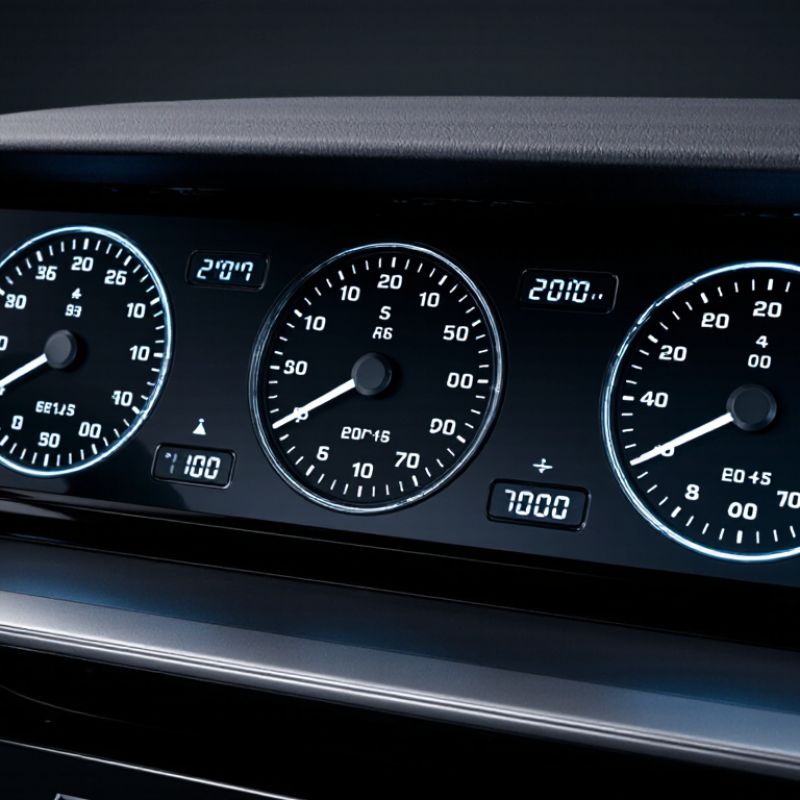
What Instrument Panel Gauges Measure and How They Work
Instrument panel gauges convert vehicle conditions into information a driver can read at a glance. Common examples show fuel level, engine coolant temperature, oil pressure, and vehicle speed. Each measurement starts with a sensor or sending unit. It detects a physical change, such as rising temperature or falling fuel level, and produces an electrical signal.
Inside the panel, electronic circuits interpret that signal and move a needle or update a digital display. A fuel sender, for example, often changes electrical resistance as the float moves inside the tank. The gauge translates that change into a reading. Some displays also smooth rapid signal changes, so the needle does not twitch over every bump. Small delays can help readability. They can also hide a sudden change for a moment.
A gauge is not a perfect witness. Its reading may be approximate, and sensor faults, wiring problems, or poor connections can produce misleading results. Oil pressure and oil level are different measurements; one cannot replace the other. When a reading looks unusual, compare it with warning lights, maintenance information, and observed vehicle behavior. For accurate readings, the sensor, wiring, and gauge must all work together.
What Instrument Panel Gauges Measure
Representative full-scale ranges for common automotive dashboard gauges. Actual ranges vary by vehicle.
Speedometers measure vehicle speed, tachometers measure engine speed, coolant and oil-pressure gauges monitor engine conditions, and fuel gauges indicate remaining fuel. Units differ, so bar lengths should not be compared across gauge types.
Types of Instrument Panel Gauges Made in China
Instrument panel gauges made in China cover several formats for cars, trucks, agricultural equipment, and machinery. Analog gauges use a pointer and marked dial, making readings easy to scan in bright daylight. Digital gauges show values on an LCD or LED screen and can combine speed, engine temperature, fuel level, and voltage in one compact unit. Hybrid designs keep physical pointers while adding a small screen for alerts or secondary readings.
Common gauge types include speedometers, tachometers, fuel gauges, coolant-temperature gauges, oil-pressure gauges, and voltmeters. Each has different input requirements. A temperature gauge, for example, must match its sensor’s resistance range; a mismatch can produce a steady but inaccurate reading. Check the operating voltage, display range, connector layout, and mounting depth before selecting a unit.
Small details matter.
For demanding environments, ask manufacturers about vibration resistance, moisture protection, backlighting, and calibration checks. A clear scale helps when the dashboard is viewed at an angle, while dimmable lighting reduces glare at night. Digital models offer flexibility, but their screens may be harder to read in direct sun unless brightness is adequate.
Simple is useful.
Yet specifications alone do not prove performance; sample testing under real operating conditions can reveal issues that a tidy datasheet misses.
How China’s Gauge Manufacturers Design and Produce Their Products
China’s instrument-panel gauge manufacturers usually start with vehicle requirements, not the display itself. Engineers define speed range, warning indicators, viewing angle, connector positions, and operating temperatures. OICA reported 93.5 million motor vehicles produced worldwide in 2023, illustrating the scale and variety these suppliers must serve. A gauge for a compact car may need a different bezel and mounting depth from one designed for a commercial vehicle. Small details matter.
Production often combines electronic and mechanical work. Circuit boards are assembled, software is loaded, and displays or pointers are calibrated against reference signals. Technicians check brightness, needle movement, warning lights, and readings across temperature conditions. Housing parts are molded and inspected for fit. Vibration and electromagnetic compatibility tests can reveal faults that a visual inspection misses. These steps reduce risk, but they do not guarantee flawless field performance.
Designs are also changing with vehicle powertrains. The IEA’s Global EV Outlook 2024 reports nearly 14 million electric cars were sold in 2023, around 18% of global car sales. That shift encourages clearer energy-use and battery-range information on panels. Yet more information can clutter a small screen. A practical design review should test readability in bright sunlight and at night, not just on a clean factory bench. One weakness remains: test conditions may not capture every driver’s habits or local road environment.
Key Factors for Comparing Chinese Instrument Panel Gauge Manufacturers
China Best Instrument Panel Gauge Manufacturers
Key Factors for Comparing Chinese Instrument Panel Gauge Manufacturers
With global motor vehicle production reaching 93.5 million units in 2023, supplier capacity deserves close scrutiny. OICA’s 2023 production statistics report output was about 10% higher than in 2022. That scale makes delivery planning and consistent quality important. Ask for documented monthly capacity, defect-rate definitions, and evidence that pilot and mass-production lines follow the same controls. Numbers need context.
Gauge performance depends on more than a clear display. Compare measurement accuracy, readability in direct sunlight, response time, and resistance to vibration and temperature changes. Request test methods, pass criteria, and sample results—not just a certificate. Check whether the supplier can support your required vehicle interfaces and provide revision-controlled drawings. A dashboard can look perfect indoors and still be hard to read at noon.
Review traceability from incoming components to final inspection, plus the process for handling failures and design changes. A factory audit can reveal whether calibration equipment is maintained and operators follow written checks. Still, even a strong scorecard has blind spots; a polished audit file does not prove every production batch performs equally. Compare physical samples and clarify who owns retesting when specifications change.
Applications, Quality Standards, and Industry Trends
China Best Instrument Panel Gauge Manufacturers
Instrument panel gauges serve cars, trucks, agricultural machines, and construction equipment. They show drivers essential information, such as speed, engine temperature, and fuel level. In a truck cab, a gauge must remain readable through glare, vibration, and long shifts. Small details matter.
Quality depends on more than a clean display. Buyers can review material specifications, production traceability, and documented quality processes. Testing should reflect actual operating conditions, including temperature changes, vibration, and electromagnetic interference. Clear calibration records also help confirm that readings stay consistent. A specification sheet alone cannot show how a gauge performs after months of daily use.
Industry trends are moving toward digital displays, flexible layouts, and closer integration with vehicle sensors. Yet traditional analog gauges remain useful where quick, familiar readings are valued. Manufacturers that support both formats may suit varied applications, but compatibility needs careful checking. The awkward part is that newer features can add complexity without improving every vehicle. A practical evaluation should consider readability, service life, installation space, and after-sales technical support.
Conclusion
Instrument panel gauges measure essential operating conditions such as speed, engine temperature, fuel level, oil pressure, and electrical system performance. They work by receiving data from sensors or mechanical components and converting it into readable information through analog displays, digital screens, or warning indicators. Manufacturers in China produce a range of gauge types for different vehicle and equipment applications, with designs tailored to required functions, installation space, readability, and operating environments.
When comparing Chinese Instrument Panel Gauge manufacturers, buyers can consider product customization, measurement accuracy, durability, production capabilities, quality control, communication, and delivery support. The design and production process may include engineering, material selection, component assembly, calibration, and performance testing. Gauges are used across automotive, agricultural, construction, marine, and industrial equipment. Quality standards and changing industry needs continue to shape product development, with growing attention to clear displays, reliable sensor integration, compact designs, and compatibility with modern electronic systems.

 Dongou