China has become a major sourcing base for Gauge Cluster Panel production, serving passenger cars, commercial vehicles, and electric mobility brands. Its manufacturers combine display engineering, plastic molding, PCB assembly, and software integration under one supply chain. That combination can shorten development cycles and simplify communication. Yet factory scale alone proves little. Buyers still need to inspect calibration records, optical bonding quality, temperature testing, and long-term supplier support.
Don Norman, a respected human-machine interface and design expert, said, “Good design is actually a lot harder to notice than poor design.” This observation fits every Gauge Cluster Panel evaluation. A strong panel should show speed, warnings, battery status, and navigation information clearly, even under direct sunlight. Its graphics must remain readable at night. Its housing should resist vibration, heat, fingerprints, and repeated adjustment. Small details matter.
This guide examines leading Gauge Cluster Panel manufacturers in China through practical purchasing criteria. It considers manufacturing experience, customization capability, display performance, quality systems, and communication reliability. Factory visits, sample comparisons, and independent verification remain valuable. Product pages can look impressive. Reality may be less polished. Some suppliers excel at prototypes but struggle with stable mass production. Others provide excellent hardware but limited software flexibility. Therefore, buyers should test complete samples, review traceability documents, and confirm after-sales responsibilities before signing contracts. A perfect supplier may not exist, but a transparent and technically capable partner is achievable.
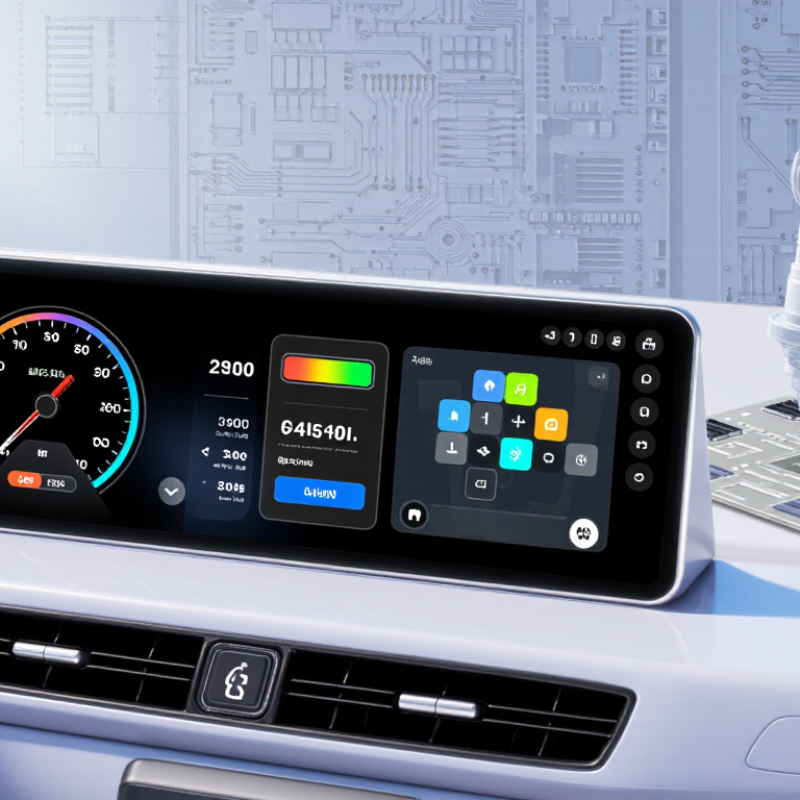
What Is a Gauge Cluster Panel and Why Does It Matter?
A gauge cluster panel is the driver’s visual control point. It displays speed, engine temperature, fuel level, warning lights, and system messages. Traditional panels use needles and backlighting, while modern designs combine LCD screens, LEDs, and vehicle network data. The panel receives information from sensors and control units, then presents it within seconds. Clear communication matters when a warning appears during rain, traffic, or nighttime driving.
A reliable gauge cluster panel needs more than an attractive screen. Engineers check brightness, viewing angles, button response, connector stability, and resistance to vibration. In Chinese manufacturing facilities, practical quality checks may include temperature cycling, dust testing, aging tests, and repeated power interruptions. Calibration is equally important. A speed reading that seems slightly inaccurate can affect driver confidence and safety. Small details matter.
Factory buyers should also examine material traceability, software validation, inspection records, and production consistency. A bright prototype proves very little. Long-term performance proves more. It is easy to overvalue appearance. I have seen polished interfaces hide weak mounting points or uneven illumination in evaluation discussions. That is why sample testing should include real dashboard conditions, not only a clean laboratory bench. One limitation remains: every vehicle platform has different network and space requirements. A panel must fit the vehicle’s architecture, not merely look modern.
A gauge cluster panel, also called an instrument cluster, is the display module located in front of the driver. It presents essential information such as vehicle speed, engine speed, fuel level, warning indicators, temperature, and—on digital systems—navigation or driver-assistance information.
China’s rising vehicle production creates significant demand for reliable gauge cluster panels. The chart uses annual automobile production figures reported by the China Association of Automobile Manufacturers (CAAM), rather than data from any individual company or brand.
Source: China Association of Automobile Manufacturers (CAAM), annual automobile production statistics. Figures are rounded to two decimal places.
When evaluating Chinese gauge cluster panel manufacturers, capacity claims need evidence. The China Association of Automobile Manufacturers reported 31.282 million vehicles produced in China during 2024. Sales reached 31.436 million units. This scale increases demand for stable, traceable cluster supply. Ask for audited monthly output, line utilization, and delivery records. Do not rely on brochure figures. A factory should demonstrate optical calibration, burn-in testing, and serial-level traceability. Photos are not proof.
Engineering depth matters more than screen brightness. Require IATF 16949 certification, ISO 26262 process evidence, and documented design-FMEA controls. Check temperature cycling, vibration, humidity, EMC, sunlight readability, and CAN or Ethernet communication. Automotive Electronics Council qualification strengthens component reliability, but it cannot replace system validation. CAAM also recorded 12.866 million new-energy vehicles sold in 2024. This shift raises expectations for thermal management and software updates. Ask how suppliers control firmware versions, diagnostic access, and end-of-line programming. Details matter.
Commercial evaluation should include warranty-return analysis, corrective-action records, mold ownership, and second-source planning. Request anonymized field data covering pixel defects, dead zones, rattling, and intermittent communication. A transparent supplier explains failure rates and corrective timing. That is real experience. Still, no scorecard is perfect. Laboratory results may not represent three years of road vibration. Visit the plant and sample units from different shifts. Do not select on price alone. Cheap panels can become expensive through rework, recalls, or delayed vehicle delivery. Verify export documentation and market requirements before approval.
| Evaluation Dimension | Recommended Benchmark or Requirement | Relevant Standard or Reference | Verification Evidence to Request | Suggested Weight |
|---|---|---|---|---|
| Automotive Quality Management | A mature supplier should operate a documented automotive quality system with controlled production, traceability, corrective action, and continuous improvement processes. | IATF 16949; ISO 9001 | Valid certificates, latest surveillance-audit records, process maps, control plans, and sample nonconformance reports. | 20% |
| Functional Safety Capability | The supplier should be able to define safety goals, conduct hazard analysis, manage safety requirements, and provide verification records for safety-relevant display functions. | ISO 26262, applicable safety integrity level determined by the vehicle program | Functional-safety process assessment, safety plan, traceability matrix, diagnostic strategy, and independent assessment records where applicable. | 15% |
| Environmental Reliability | Testing should cover temperature cycling, thermal shock, humidity, vibration, mechanical shock, and long-duration endurance according to the vehicle installation location. | ISO 16750 series; applicable OEM environmental specifications | Test plans, laboratory qualification reports, failure-analysis records, and clearly defined operating and storage temperature ranges. | 15% |
| Electromagnetic Compatibility | The complete cluster assembly should demonstrate immunity and emissions performance under vehicle electrical and radio-frequency conditions. | UNECE R10 where applicable; ISO 11452; CISPR 25; applicable national requirements | EMC pre-scan and compliance reports, test configuration, cable layout, antenna setup, and corrective-action history. | 10% |
| Display and Optical Performance | The design should maintain readable warning symbols, stable brightness, acceptable viewing angles, and controlled optical performance across the specified temperature range. | Vehicle-program optical specifications; IEC 62471 where LED photobiological safety is relevant | Luminance and contrast measurements, color-consistency data, sunlight-readability tests, viewing-angle results, and night-dimming validation. | 10% |
| Software and Communication | The supplier should support controlled embedded-software development, diagnostics, bootloader functions, communication interfaces, and software version traceability. | ISO 26262; Automotive SPICE where required; CAN, LIN, Ethernet, or other program-specific protocols | Software-development lifecycle documents, interface control documents, diagnostic specifications, cybersecurity process records, and release history. | 10% |
| Production and Process Control | Critical processes should use approved work instructions, automated inspection where appropriate, controlled calibration, poka-yoke, and documented change management. | IATF 16949 core tools; APQP; PPAP; FMEA; MSA; SPC | Process flow charts, PFMEA, control plans, gauge R&R results, production-line audit reports, and PPAP packages. | 10% |
| Supply-Chain and Component Control | The supplier should identify critical electronic, optical, mechanical, and semiconductor components and maintain approved-source, counterfeit-prevention, and obsolescence controls. | IATF 16949 supplier-management requirements; IEC 62474 material declaration principles where applicable | Approved vendor list, incoming-inspection plans, material declarations, traceability records, and component lifecycle-management procedures. | 5% |
| Program and Ramp-Up Capability | A capable manufacturer should provide engineering samples, design validation, process validation, pilot production, capacity planning, and controlled production ramp-up. | APQP and PPAP methodology; customer-specific requirements | Milestone plan, prototype schedule, capacity calculation, line-balance study, tooling plan, and launch-readiness review records. | 3% |
| After-Sales and Warranty Support | The supplier should have defined response times, field-failure analysis, warranty data management, spare-parts planning, and escalation procedures. | IATF 16949 customer-specific requirements; ISO 9001 corrective-action principles | Warranty-return workflow, 8D reports, failure-analysis capability, service-level agreement, and historical quality-performance dashboard. | 2% |
| Total Suggested Evaluation Weight | 100% | |||
Leading gauge cluster panel manufacturers in China combine engineering knowledge, production capacity, and dependable quality control. They develop panels for passenger vehicles, commercial vehicles, agricultural equipment, and specialty applications. Experienced manufacturers understand that a cluster panel is more than a visible trim component. It must support clear readings, stable mounting, controlled illumination, and long-term resistance to vibration.
Strong suppliers usually provide design assistance from the early drawing stage. Their engineers review material selection, surface texture, button layout, and connector placement. They may use injection molding, laser marking, coating, and assembly inspection in one production workflow. Sample panels should be tested under heat, humidity, vibration, and repeated switch operation. Small details matter. A loose clip can create noise. Uneven backlighting can reduce driver confidence.
Reliable manufacturers also maintain traceable production records and clear inspection standards. Buyers should ask about mold ownership, sample approval, tolerance control, and corrective action procedures. Factory visits or third-party audits can reveal practical conditions that brochures omit. However, not every supplier with modern equipment delivers consistent results. That gap deserves attention. Some projects also suffer from rushed feedback and unclear specifications. Careful communication remains essential. The best manufacturing partner is not always the largest one. It is the supplier that documents decisions, responds honestly to defects, and improves the design when field experience exposes a weakness.
China’s gauge cluster panel manufacturers offer more than molded plastic covers. Many provide tooling, injection molding, surface finishing, assembly, and inspection within one production program. Common materials include ABS, PC, PMMA, and reinforced blends. These materials support heat resistance, impact strength, and stable optical performance.
Capabilities vary by supplier. Experienced factories can develop anti-glare textures, transparent windows, LED light guides, and precise switch openings. Some also integrate flexible circuits, warning indicators, touch controls, and communication interfaces. Dimensional inspection is important around the steering column and display aperture. Small deviations can create noise, uneven gaps, or difficult installation. Fit matters.
These panels serve passenger cars, electric vehicles, commercial trucks, agricultural machines, and construction equipment. Vehicle programs may require UV resistance, low-temperature toughness, flame-retardant materials, and reliable sealing. Commercial applications often prioritize large readable displays and durable buttons. Off-road equipment needs stronger fastening points and surfaces that tolerate dust, vibration, and repeated cleaning.
Practical verification should include heat cycling, vibration checks, surface abrasion tests, and light-transmission measurements. A supplier may pass appearance inspection yet miss long-term color stability. That risk deserves attention. Engineers should review drawings, material certificates, prototype data, and traceability records before mass production. Manufacturing experience helps, but no process is perfect. Continuous feedback remains necessary.
Selecting the right Chinese manufacturer starts with your actual gauge cluster panel requirements. Share drawings, mounting points, display openings, surface finish, and operating temperature. A capable supplier should review these details before quoting. Ask for material specifications, dimensional tolerances, and previous production samples. See the process.
Evaluate engineering depth, not only factory size. Request evidence of mold design control, injection parameters, surface inspection, and assembly testing. A reliable manufacturer can explain how it prevents warping, color variation, loose clips, and uneven backlighting. Check whether quality records are traceable by batch. Independent testing may also confirm heat resistance, vibration performance, and aging behavior.
Commercial terms need equal attention. Compare tooling charges, minimum order quantities, sample fees, lead times, packaging, and replacement policies. Require a written inspection standard with photographs and measurable limits. A video call can reveal production discipline, but an on-site audit gives stronger evidence. Look at storage conditions and the cleanliness around assembly benches. No supplier is flawless. A minor reporting delay should not automatically end cooperation, but repeated vague answers deserve caution. I would also test communication during a small pilot order. The best quote can still fail when revisions become slow or unclear. Keep one approved sample, signed drawings, and change records before mass production.
It displays speed, engine temperature, fuel level, warning lights, and system messages. It acts as the driver’s visual control point. Clear information matters.
Sensors and control units send data through the vehicle’s network. The panel processes and presents readings within seconds. Delays can confuse drivers.
They should test brightness, viewing angles, button response, connector stability, vibration resistance, and calibration. Testing should include heat cycling, dust exposure, aging, and power interruptions.
Accurate readings support driver confidence and safer decisions. Even a slightly incorrect speed reading can create concern. Small errors matter.
Common materials include ABS, PC, PMMA, and reinforced blends. They can support heat resistance, impact strength, and stable optical performance. Material choice depends on the vehicle environment.
Applications include passenger vehicles, electric vehicles, commercial trucks, agricultural machines, and construction equipment. Off-road vehicles often need stronger fastening points and dust-resistant surfaces.
Buyers should review drawings, material certificates, inspection records, software validation, and traceability documents. Factory visits or independent audits can reveal conditions that brochures omit.
No. A bright prototype may hide weak mounting points or uneven illumination. Sample testing should copy real dashboard conditions, including vibration, heat, and repeated switch use.
Dimensional errors may cause noise, uneven gaps, or difficult installation. Poor connector placement can also complicate assembly. Fit matters more than appearance.
A Gauge Cluster Panel is a vital vehicle interface that displays essential information such as speed, engine status, fuel level, warning signals, and navigation data. Its quality directly affects driving safety, user experience, and vehicle design. This article explains the main factors to consider when evaluating Chinese manufacturers, including product reliability, display clarity, electronic integration, customization capabilities, quality control, production capacity, certifications, and after-sales support.
It also introduces the typical capabilities of leading Chinese manufacturers and their applications across passenger vehicles, commercial transportation, electric vehicles, and specialized mobility equipment. To select the right supplier, buyers should compare technical expertise, manufacturing resources, communication efficiency, delivery performance, testing standards, and total project value. A clear understanding of product requirements and supplier strengths can help businesses establish a dependable partnership and develop a Gauge Cluster Panel that meets performance, safety, and market expectations.

Dongou