Choosing the right Digital Racing Dashboard supplier can influence how quickly a driver understands the car.
A clear display should reveal speed, engine revolutions, oil pressure, water temperature, lap time, and warning alerts without distracting the driver. In a noisy cockpit, every symbol must earn its place. Bright sunlight, vibration, gloves, and limited steering-wheel space can expose weak design choices. A dashboard that looks impressive in a brochure may feel confusing during a night race.
Motorsport engineer Carroll Smith wrote, “The stopwatch is always right.” His statement remains useful for digital racing technology. Data should support measurable improvements, not create visual decoration. The strongest suppliers combine accurate sensors, readable software, durable housings, and responsive technical support. They also understand different racing environments, from club-level track days to professional endurance events.
This Top 10 Digital Racing Dashboard Suppliers Worldwide overview examines those practical differences. It considers display clarity, logging capability, communication protocols, customization, installation effort, and long-term reliability. Supplier experience matters, but it should not end the discussion. Some brands offer advanced features that smaller teams may never use. Others provide simpler systems that are easier to configure under pressure.
There is no perfect dashboard.
A serious comparison must acknowledge trade-offs. Cost, compatibility, service access, and driver preference can change the final decision. The rankings therefore focus on real-world usefulness rather than marketing claims. Readers should still confirm current specifications, software support, and vehicle compatibility before purchasing. That final check is easy to skip, and often expensive to ignore.
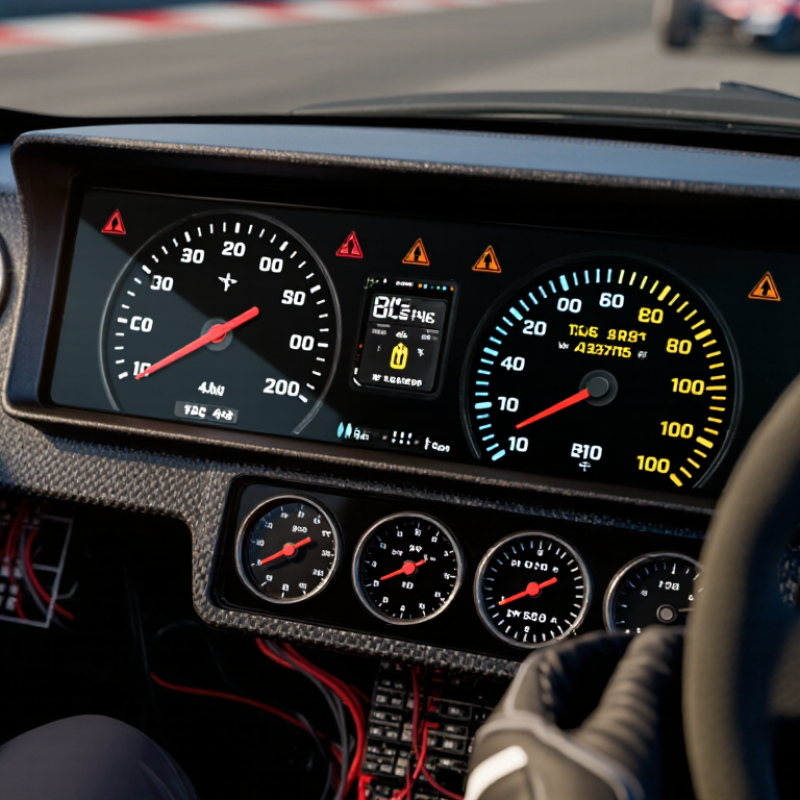
Definition and Role of Digital Racing Dashboards
A digital racing dashboard is an electronic display that presents critical vehicle data during competition. It can show speed, engine revolutions, lap time, gear position, temperatures, pressures, and warning alerts. Unlike traditional gauges, it gathers information from multiple sensors and places it within one compact screen. This supports faster decisions when visibility, noise, and concentration are limited.
The dashboard’s role extends beyond displaying numbers. It helps drivers manage braking points, shift timing, tire behavior, and mechanical risks. Engineers also use recorded data to compare laps and identify performance losses. A clear layout matters. Large digits, strong contrast, and adjustable brightness can improve reading under changing sunlight. However, more information is not always better. An overloaded screen may distract the driver at the worst moment. This is where careful testing becomes essential.
Tips: Select screens with reliable sensor compatibility, rapid updates, and clear warning logic. Test the display while wearing racing gloves and sitting in the actual driving position. Check readability at night and under direct sunlight. Keep essential data visible, but move secondary information away from the main view. Review the layout after each test session. Small details can reveal weak decisions. Even experienced teams sometimes prioritize attractive graphics over useful information, and that mistake deserves regular reconsideration.
Top 10 Digital Racing Dashboard Suppliers Worldwide
Definition and Role of Digital Racing Dashboards
Digital racing dashboards collect, process, and display vehicle telemetry so drivers can monitor performance and make rapid decisions. The chart shows representative engineering update rates for ten common data dimensions; actual rates vary according to vehicle electronics, sensors, and racing series regulations.
Key Features Used to Compare Global Dashboard Suppliers
Top 10 Digital Racing Dashboard Suppliers Worldwide: Key Features Used to Compare Global Dashboard Suppliers
Choosing a racing dashboard requires more than counting screen pixels. In track testing, sunlight readability, refresh stability, and data latency affect driver decisions within seconds. A 2024 MarketsandMarkets automotive display report projects strong market growth through 2028, driven by connected interfaces and advanced vehicle electronics. That trend supports wider dashboard choice, but it also creates noise.
The most useful comparison starts with compatibility. Check CAN, LIN, Ethernet, GPS, and common engine-control data inputs. A dashboard should display oil pressure, coolant temperature, lap delta, fuel level, and warning alerts without clutter. Refresh rates above 20 Hz can make live data feel smoother, although faster is not automatically better. Waterproofing, vibration resistance, thermal performance, and glove-friendly controls deserve equal attention. Small buttons matter.
Software separates capable suppliers from attractive ones.
Look for flexible page layouts, alarm thresholds, data logging, firmware updates, and simple export tools. The 2024 S&P Global Mobility consumer technology research shows rising expectations for connected vehicle functions, but racing users need reliability more than novelty. Independent test evidence is valuable. Ask for operating-temperature results, warranty terms, repair procedures, and documented integration support. No scorecard is perfect. A bright screen may still distract a driver, while a cheaper unit may hide weak software. I would also test menu access while wearing gloves, because specifications rarely reveal that uncomfortable detail.
Leading Digital Racing Dashboard Suppliers Worldwide
Top 10 Digital Racing Dashboard Suppliers Worldwide
Leading digital racing dashboard suppliers worldwide are responding to stricter data demands and faster vehicle development cycles. MarketsandMarkets reports that the global automotive display market could grow from approximately USD 7.5 billion in 2023 to USD 11.8 billion by 2028. Racing applications represent a specialized segment, requiring lower latency, stronger vibration resistance, and clearer visibility than ordinary road displays.
The leading ten suppliers typically compete through configurable dashboards, CAN bus compatibility, programmable alarms, and data-logging support. A professional unit should remain readable under direct sunlight, gloves, and rapid steering movements. Installation experience also matters. Poor cable routing can create signal noise, maintenance delays, or avoidable failures during testing. Grand View Research identifies motorsport as a technology-intensive market, where telemetry and electronic systems increasingly influence performance decisions.
However, broad automotive display figures should not be treated as direct racing-dashboard sales. That distinction is easy to miss. Suppliers should provide measured refresh rates, operating-temperature data, enclosure ratings, and documented software updates. Independent testing is valuable, but it may not reflect every circuit condition. Procurement teams should compare response time, connector durability, data protocol support, and after-sales engineering. Numbers can mislead. A visually impressive screen may still deliver weak sunlight performance or limited diagnostic depth. For global buyers, regional technical support and spare-part availability deserve equal attention.
Top 10 Digital Racing Dashboard Suppliers Worldwide - Leading Digital Racing Dashboard Suppliers Worldwide
| Rank |
Anonymous Supplier Profile |
Primary Market Coverage |
Typical Display Size |
Display Technology |
Common Data Interfaces |
Peak Data Update Rate |
Typical Protection Rating |
Operating Temperature |
Typical Application |
Capability Score |
| 1 |
Supplier Profile 01 |
Global |
4.3–7.0 in |
High-brightness TFT LCD |
CAN, CAN FD, Ethernet, USB |
Up to 100 Hz |
IP65–IP67 |
-20°C to +70°C |
Professional circuit racing |
9.6/10 |
| 2 |
Supplier Profile 02 |
Europe, North America, Asia-Pacific |
4.0–6.8 in |
Sunlight-readable TFT LCD |
CAN, RS-232, Ethernet, USB |
Up to 100 Hz |
IP65–IP67 |
-30°C to +70°C |
GT and touring cars |
9.4/10 |
| 3 |
Supplier Profile 03 |
North America, Europe |
5.0–10.0 in |
IPS LCD with bonded cover lens |
CAN, Ethernet, Wi-Fi, USB |
Up to 60 Hz |
IP65 |
-20°C to +65°C |
Formula and endurance racing |
9.2/10 |
| 4 |
Supplier Profile 04 |
Europe, Asia-Pacific |
4.3–7.0 in |
Color TFT LCD with LED indicators |
CAN, CAN FD, RS-232, USB |
Up to 100 Hz |
IP65–IP67 |
-20°C to +70°C |
Rally and hill-climb cars |
9.0/10 |
| 5 |
Supplier Profile 05 |
Asia-Pacific, Europe |
3.5–6.5 in |
High-contrast TFT LCD |
CAN, RS-232, USB, Bluetooth |
Up to 50 Hz |
IP54–IP67 |
-20°C to +60°C |
Club racing and track days |
8.8/10 |
| 6 |
Supplier Profile 06 |
North America, Latin America |
4.3–7.0 in |
Optically bonded LCD |
CAN, Ethernet, USB, GPS |
Up to 60 Hz |
IP65 |
-20°C to +70°C |
Sports cars and endurance racing |
8.6/10 |
| 7 |
Supplier Profile 07 |
Europe, Middle East, Asia-Pacific |
4.0–6.0 in |
Monochrome or color LCD |
CAN, RS-232, USB |
Up to 50 Hz |
IP54–IP65 |
-20°C to +65°C |
Rally and amateur motorsport |
8.4/10 |
| 8 |
Supplier Profile 08 |
Global distribution |
5.0–10.0 in |
Wide-angle TFT or IPS LCD |
CAN, Ethernet, Wi-Fi, USB |
Up to 60 Hz |
IP65 |
-10°C to +60°C |
Telemetry and simulator integration |
8.2/10 |
| 9 |
Supplier Profile 09 |
Asia-Pacific, North America |
3.5–5.5 in |
Compact TFT LCD with shift lights |
CAN, RS-232, USB |
Up to 50 Hz |
IP54–IP65 |
-20°C to +60°C |
Club-level circuit racing |
8.0/10 |
| 10 |
Supplier Profile 10 |
Europe, North America |
4.0–7.0 in |
High-brightness LCD with configurable layouts |
CAN, CAN FD, USB, Bluetooth |
Up to 50 Hz |
IP54–IP65 |
-20°C to +65°C |
Entry-level and semi-professional racing |
7.8/10 |
Technical figures represent commonly documented specification ranges for professional and club-level digital racing dashboard systems. Supplier identifiers are anonymized and do not display company or brand names.
Industries and Racing Applications for Digital Dashboards
Digital dashboards serve distinct racing industries, from circuit competition to rally, karting, and endurance events. Each application demands different information and hardware performance. In circuit racing, drivers usually monitor speed, engine temperature, oil pressure, fuel level, lap time, and warning alerts. A clean layout helps them react without looking away for long. At high speed, a small delay can matter.
Rally cars need displays that remain readable through dust, vibration, changing light, and sudden impacts. Drivers may need gear position, stage time, navigation prompts, and mechanical warnings in one compact view. Off-road racing adds another challenge: mud, water, and rough terrain can damage weak connectors or poorly sealed screens. Karting dashboards are smaller, but lap timing and engine data remain valuable. Endurance teams often study fuel use, tire condition, and driver performance across several hours.
When evaluating worldwide suppliers, racing teams should inspect display brightness, refresh speed, sensor compatibility, mounting options, and data-logging capacity. Installation support also matters. A powerful dashboard can still fail when wiring is confusing or software updates are unreliable. No system fits every cockpit. That limitation is easy to overlook. I would test the unit during night running, heavy vibration, and rapid temperature changes before trusting it in competition. Even then, drivers should keep critical warnings simple, because more data does not always create better decisions.
Selection Criteria for Buyers and Racing Teams
Top 10 Digital Racing Dashboard Suppliers Worldwide
Selection Criteria for Buyers and Racing Teams
A racing dashboard should be judged at the circuit, not only in a product catalogue. The FIA’s 2024 Global Fan Survey collected more than 167,000 responses, showing motorsport’s broad and demanding audience. For teams, however, reliability matters more than visual appeal. Select a supplier that documents display latency, CAN compatibility, logging capacity, and update procedures.
Check readability under direct sunlight. A driver may have less than one second to read an alarm before braking. The screen should remain clear through vibration, rain, gloves, and rapid temperature changes. Independent test records are valuable. Ask for thermal-cycle results, connector ratings, and failure data. Marketing claims are not evidence.
Data ownership also deserves attention. Formula 1’s 2023 annual report reported a global fan base of 826 million, reflecting the sport’s increasingly data-led operation. Yet more data does not automatically improve decisions. Confirm whether teams can export raw channels, retain configuration files, and integrate third-party sensors. Cybersecurity controls and role-based access should be written into the contract. Service coverage during race weekends is equally important; a delayed replacement can cost more than the original unit. A low purchase price can become expensive. Buyers sometimes overlook spare displays, calibration tools, training, and software fees. That mistake is understandable, but avoidable. Supplier rankings should therefore include lifecycle cost, not just screen size or brand reputation.
FAQS
It can show speed, engine revolutions, lap time, gear position, temperatures, and pressures. Warning alerts may appear when readings become unsafe. All key information fits on one compact screen.
It supports decisions about braking points, shifting, tire behavior, and mechanical risks. Large digits help drivers read information quickly through noise and changing light. Small delays can matter.
Check compatibility with CAN, LIN, Ethernet, GPS, and engine-control data inputs. Confirm that the system can receive oil pressure, coolant temperature, fuel level, and lap data. Compatibility claims still need testing.
Not necessarily. Refresh rates above 20 Hz can make live information appear smoother. Faster updates may add little value if the sensors or software respond slowly.
Strong contrast, adjustable brightness, and clear warning colors improve readability. The screen should remain visible under direct sunlight and at night. Test it twice.
No. Essential data should stay in the driver’s main view. Secondary information can move to another page, because an overloaded screen may cause distraction.
Test it in the actual driving position while wearing racing gloves. Check buttons, menu access, vibration resistance, waterproofing, and operating temperature. Small buttons matter.
Look for flexible page layouts, adjustable alarm thresholds, data logging, firmware updates, and simple data exports. Review the layout after every test session. Attractive graphics can still hide weak decisions.
Conclusion
A Digital Racing Dashboard is an advanced display and data-management system designed to give drivers and racing teams clear, real-time information during track sessions and competitions. It can present essential data such as speed, engine performance, lap times, tire conditions, fuel status, temperatures, warning alerts, and GPS-based track information. This article explains the main features used to compare global suppliers, including display visibility, data accuracy, sensor compatibility, recording capacity, connectivity, software flexibility, durability, and ease of installation.
The overview also introduces leading types of suppliers serving different levels of motorsport, from professional racing and testing programs to karting, performance vehicles, and driver-training applications. Buyers and racing teams should evaluate product reliability, customization options, technical support, upgrade potential, environmental resistance, and total ownership cost. By matching these factors with vehicle requirements, competition goals, and team workflows, users can select a dashboard solution that improves situational awareness, supports consistent performance, and helps organize valuable racing data.

 Dongou