Choosing among China’s top Dashboard Instrument manufacturers requires more than comparing factory photos or unit prices. A reliable evaluation examines display clarity, sensor accuracy, CAN bus compatibility, enclosure durability, software flexibility, and production consistency. These details become visible inside a vehicle: a dim screen at noon, a delayed warning light, or an unreadable fuel gauge can weaken driver confidence quickly.
Design matters.
Donald Norman, a recognized authority on human-centered interface design, states, “Design is really an act of communication.” This principle applies directly to every Dashboard Instrument. Manufacturers must translate speed, temperature, pressure, and warning data into information that drivers can understand immediately. Strong suppliers also document calibration procedures, quality controls, material choices, and validation results. Certifications and test reports should be checked, not merely mentioned.
This guide reviews leading Chinese manufacturers through a practical purchasing lens. It considers engineering experience, OEM and aftermarket capability, customization depth, delivery reliability, and technical support. Factory audits, sample testing, and customer references can reveal differences that brochures hide. Some suppliers may offer impressive prototypes but struggle with long-term consistency. That possibility deserves attention.
The best choice depends on the vehicle platform, operating environment, target market, and required production volume. A marine display needs different protection from a heavy-truck instrument cluster. A low-cost design may also create expensive warranty risks. Therefore, this overview is not a final verdict. It is a starting point for careful comparison, technical questioning, and evidence-based selection of a Dashboard Instrument manufacturing partner.
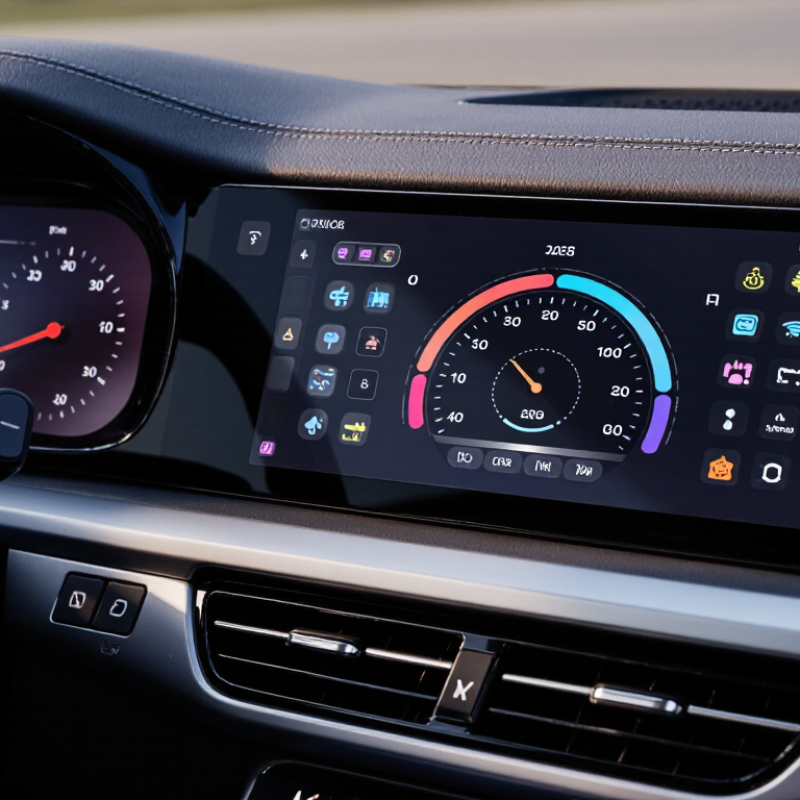
China Top Dashboard Instrument Manufacturers?
Dashboard instrument manufacturers in China design and produce the visual control systems used in vehicles and industrial machines. These systems may include speed displays, warning indicators, gauges, touch panels, and integrated electronic modules. Their role is not limited to assembling a screen. They convert sensor signals into clear information that operators can understand within seconds.
A capable manufacturer manages several connected tasks. Engineers select durable materials, develop circuit layouts, and test readability under sunlight, vibration, and temperature changes. Production teams then control calibration, sealing, wiring, and inspection records. In practical factory evaluations, buyers often examine sample units, test response time, and review quality procedures before discussing volume orders. Small details matter. A loose connector can interrupt an otherwise reliable instrument.
Manufacturers also support customization. They may adjust display size, mounting structure, communication interfaces, language settings, or warning logic for different equipment. Technical communication is essential here, especially when drawings change during development. No checklist is perfect. Some suppliers provide strong prototypes but weaker documentation, while others deliver consistent records yet need more design guidance. This gap deserves careful review. Buyers should compare testing evidence, production experience, after-sales responsiveness, and the manufacturer’s ability to trace each unit from components to final inspection. Reliability is built through repeated verification, not attractive specifications alone.
A practical overview of dashboard instrument manufacturing capabilities, product categories, technical standards, and supplier evaluation dimensions in China.
| Category | Data Dimension | Representative Industry Data | Role in Dashboard Instrument Manufacturing |
|---|---|---|---|
| Definition | Dashboard instrument | An electronic or electromechanical vehicle display assembly that presents information such as vehicle speed, engine speed, fuel level, coolant temperature, warning status, and system messages. | Provides the driver with essential operating, safety, and diagnostic information in a single visual interface. |
| Core Product | Instrument cluster types | Common types include analog clusters, semi-digital clusters, fully digital clusters, LCD clusters, TFT clusters, and compact warning-indicator panels. | Allows vehicle manufacturers to select a display architecture based on vehicle class, cost, styling, and electronic system requirements. |
| Display Technology | Display components | Typical technologies include stepper-motor gauges, segmented LCDs, monochrome displays, color TFT-LCDs, LED indicators, and integrated telltale lamps. | Controls readability, information density, appearance, power consumption, and day/night visibility. |
| Information Function | Displayed parameters | Typical parameters include speed, engine speed, fuel level, coolant temperature, odometer, trip distance, gear position, turn signals, high beam, seat-belt status, and warning messages. | Converts signals from vehicle sensors and control units into clear driver-facing information. |
| Communication | Vehicle network interfaces | Controller Area Network (CAN) is widely used for vehicle communication. Other interfaces may include LIN, UART, SPI, I²C, and Ethernet depending on the vehicle architecture. | Enables the instrument cluster to receive real-time data from the engine, transmission, body, safety, and electric-drive control systems. |
| Electric Vehicles | EV-specific information | Electric-vehicle clusters commonly display battery state of charge, estimated driving range, charging status, regenerative-braking status, drive mode, and high-voltage system warnings. | Presents battery and energy-management information required for electric vehicle operation and safety. |
| Safety | Warning and telltale functions | Typical warning functions cover braking-system faults, airbag faults, ABS faults, battery charging faults, engine faults, tire-pressure warnings, and seat-belt reminders. | Communicates abnormal conditions quickly and supports driver response to safety-critical events. |
| Human-Machine Interface | Readability requirements | Important design factors include viewing angle, luminance, contrast, anti-glare performance, symbol clarity, font size, color coding, and day/night illumination control. | Improves driver recognition while reducing visual distraction and interpretation time. |
| Environmental Reliability | Operating conditions | Automotive dashboard instruments are generally designed for wide temperature variation, vibration, shock, humidity, dust, electrical transients, and long operating life. | Ensures stable display and communication performance in passenger cars, commercial vehicles, construction equipment, and specialty vehicles. |
| Quality Testing | Common validation tests | Typical tests include temperature cycling, high-temperature operation, low-temperature operation, humidity exposure, vibration, mechanical shock, UV exposure, ingress checks, electrical endurance, and electromagnetic compatibility testing. | Verifies that the instrument can withstand vehicle operating conditions before mass production. |
| Compliance | Relevant technical references | Common references include ISO 2575 for road-vehicle symbols, ISO 16750 for environmental conditions and testing of electrical and electronic equipment, CISPR 25 for vehicle component radio-disturbance measurement, and applicable national vehicle regulations. | Provides a framework for symbol design, environmental durability, electromagnetic compatibility, and market access. |
| Manufacturing Process | Typical production stages | The process generally includes engineering design, optical and electronic simulation, printed-circuit-board assembly, display and gauge assembly, housing assembly, software loading, calibration, functional testing, and final inspection. | Transforms electrical, mechanical, optical, and software designs into a validated dashboard instrument. |
| Engineering Capability | Development services | Qualified suppliers may provide industrial design, 3D mechanical design, electronic hardware development, embedded software, CAN database integration, optical design, tooling, prototyping, and validation support. | Reduces the need for multiple subcontractors and supports customized vehicle programs. |
| Customization | Available customization areas | Customization may cover display size, graphics, dial layout, warning symbols, connector configuration, housing geometry, mounting points, communication protocol, software functions, and brand-neutral user-interface requirements. | Allows the instrument to match the vehicle platform, dashboard packaging, electrical architecture, and local regulatory requirements. |
| Manufacturing Ecosystem | Supply-chain resources in China | China has established supply chains for PCBs, display modules, LEDs, microcontrollers, connectors, injection-molded housings, decorative parts, tooling, test equipment, and electronic assembly services. | Supports integrated sourcing, flexible production, rapid prototyping, and scalable component procurement. |
| Production Scale | Production model | Manufacturers commonly support prototype builds, pilot production, low-volume customized orders, and high-volume serial production, subject to tooling, testing, and project requirements. | Enables customers to move from development samples to regular vehicle production without changing the complete supply model. |
| Supplier Evaluation | Key selection criteria | Important criteria include automotive quality-system certification, product validation capability, traceability, software competence, CAN integration experience, test coverage, change control, delivery performance, and after-sales engineering support. | Helps buyers assess technical risk, production consistency, compliance readiness, and long-term project support. |
| Quality Management | Automotive quality practices | A mature automotive supplier normally applies documented process control, incoming inspection, automated optical inspection, end-of-line testing, failure analysis, corrective action, lot traceability, and engineering-change management. | Improves consistency and makes manufacturing problems easier to identify, contain, and correct. |
| Applications | Vehicle segments | Dashboard instruments are used in passenger cars, buses, trucks, agricultural machinery, construction equipment, motorcycles, recreational vehicles, and other road or off-road vehicles. | Provides a common information interface across different vehicle platforms and operating environments. |
| Business Value | Manufacturer contribution | Dashboard instrument manufacturers combine display hardware, embedded software, mechanical packaging, communication integration, testing, and production management into one vehicle-interface solution. | Helps vehicle producers shorten development cycles, manage interface complexity, and achieve stable large-scale production. |
Note: The table summarizes commonly used automotive dashboard instrument technologies, functions, standards, and supplier-evaluation criteria. Actual specifications vary by vehicle platform, market, and project requirements.
They produce visual control systems for vehicles and industrial machines. These may include speed displays, warning lights, gauges, touch panels, and electronic modules.
The manufacturer converts sensor signals into readable information. Operators should understand the display within seconds, even during vibration or bright sunlight.
A typical unit contains a circuit board, display, protective lens, housing, and connector system. Each part affects durability and readability.
Units may undergo power, brightness, vibration, temperature, and communication tests. Engineers also inspect solder joints and check calibration records.
A display can look clear indoors but become weak outside. Buyers should inspect sample units under direct sunlight before approving production.
Request samples, test response time, and review inspection procedures. Check material certificates, test limits, and records linking components to final inspection.
Manufacturers may adjust display size, mounting holes, connector dimensions, language settings, and warning logic. Drawings must match physical samples.
Heat exposure may cause calibration drift. Loose connectors can interrupt readings. Aging tests help, but they do not remove every risk.
No. A polished prototype proves limited capability. Production consistency, documentation, response speed, and traceable testing matter more over time.
Confirm the final drawings, connector structure, display brightness, calibration limits, and communication requirements. Small omissions can cause expensive rework. Mistakes happen.
China’s dashboard instrument manufacturers play an important role in supplying reliable display and monitoring solutions for vehicles, industrial equipment, agricultural machinery, and other applications. A Dashboard Instrument typically presents essential information such as speed, temperature, fuel level, operating status, warning signals, and system data. Chinese manufacturers offer various product categories, including analog gauges, digital displays, multifunction panels, and customized electronic instrument clusters, with features such as clear visibility, compact design, data integration, durability, and resistance to vibration and environmental changes.
The design and production process generally includes needs analysis, structural and electronic design, prototype development, component selection, assembly, software integration, and performance verification. Quality standards, relevant certifications, and testing procedures are important for ensuring accuracy, safety, stability, and long service life. When evaluating a Chinese manufacturer, buyers should consider technical capability, customization support, production capacity, quality control systems, testing equipment, delivery reliability, communication, and after-sales service. A comprehensive assessment can help customers select a suitable manufacturing partner for their specific application and performance requirements.

 Dongou