Global buyers face a wide range of Instrument Board designs, materials, and interface options. The right choice depends on the equipment, operating environment, and people who will use it. A board installed in a clean control room may need different features from one exposed to vibration, dust, or frequent temperature changes. Small details matter.
This guide introduces common types, including analog, digital, hybrid, and application-specific boards. It explains how their layouts, displays, mounting methods, and construction materials affect everyday use. A clear display can help operators read values quickly. Well-spaced controls can reduce confusion during routine adjustments. Yet more features do not always mean better performance. Sometimes, a simpler panel is easier to maintain.
For purchasing teams, comparing products only by price can leave important questions unanswered. Check the intended application, available space, wiring access, service needs, and compatibility with existing equipment. Ask suppliers for clear specifications and practical documentation. Where possible, review samples or drawings before confirming an order. These steps can reveal fit or usability concerns early, though they cannot predict every condition in the field.
There is no universal best board. Even experienced buyers may need to revisit their assumptions after installation. The sections ahead offer a practical framework for evaluating options, discussing requirements with manufacturers, and choosing an Instrument Board that suits the job rather than simply following a popular specification.
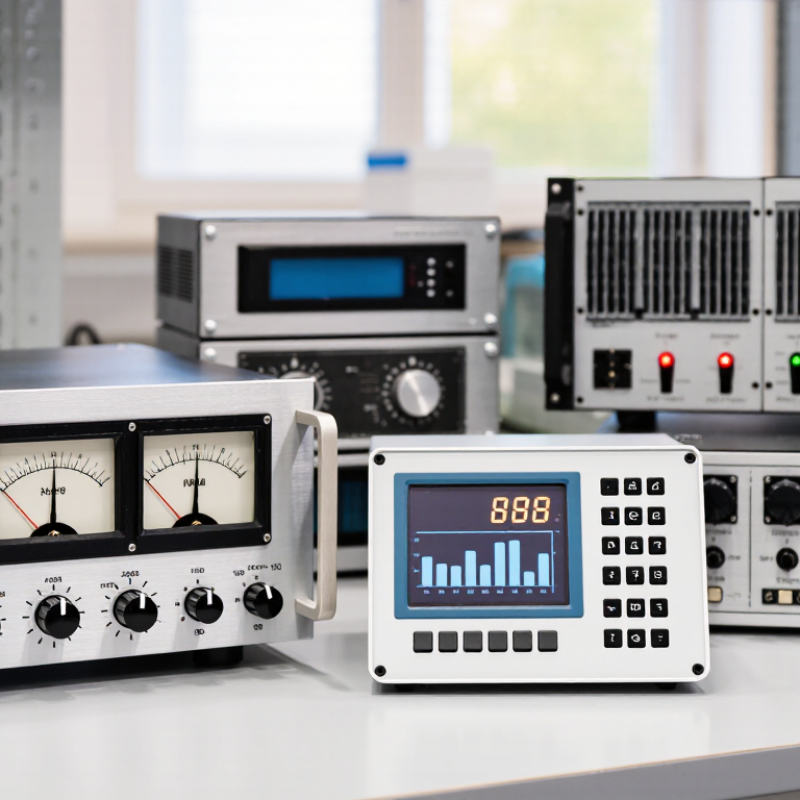
2026 Top Instrument Board Types for Global Buyers
Classify Instrument Boards by Analog, Digital, and Hybrid Architectures
Instrument boards generally use analog, digital, or hybrid architectures. Analog boards handle signals through continuous electrical paths. Their layouts can be straightforward, and operators can often trace a signal with a meter. They suit equipment that needs direct, responsive control. However, noise, component drift, and calibration demands can affect readings. Small details matter.
Digital boards convert signals into data for processing and display. They support programmable functions, clear readouts, and repeatable settings. Buyers should check input ranges, resolution, update rate, and compatibility with connected sensors. A sharp screen alone does not guarantee accurate measurements. Installation conditions matter, too.
Hybrid boards combine analog signal conditioning with digital processing. This can preserve useful signal behavior while adding flexible controls and data handling. The trade-off is greater design complexity: verify interfaces, grounding, service access, and environmental ratings against the actual application. In practice, the “best” architecture may change with the instrument and operating conditions. That is easy to overlook.
Tips: Match the board to the signal, not just the feature list. Review a wiring diagram and test readings under realistic load. Leave room for maintenance; cramped layouts cause avoidable frustration.
Instrument boards differ most in how they present information. Analog needle displays are easy to scan at a glance, especially for speed or engine temperature. Segmented LCDs use little power and remain clear in bright daylight, but show fewer details. TFT displays can combine warning icons, numbers, and system status on one screen. More features are not always better.
Resolution affects what a driver can read, not just how sharp a screen looks. A small display with crowded labels may be harder to use than a simpler, larger one. Check viewing distance, character height, contrast, and nighttime dimming. Small details matter. A resolution figure alone cannot predict readability through glare or vibration.
Power compatibility needs the same careful check. A board designed for a 12 V system may not tolerate a 48 V supply directly; confirm its rated input range before installation. Some equipment needs a suitable converter, and voltage dips or spikes can still affect operation. Check connector pinouts, grounding, and sensor signal ranges too. A neat specification sheet can leave gaps, so ask for test conditions and wiring details. There is no perfect format for every vehicle.
| Instrument Board Type | Typical Display Format | Typical Resolution | 12 V System Compatibility | 48 V System Compatibility | Common Advantages | Key Considerations |
|---|---|---|---|---|---|---|
| Analog gauge cluster | Physical needle gauges with indicator lamps; may include a small monochrome information screen | Not applicable to mechanical gauges; optional screen commonly uses a low-resolution segmented or dot-matrix display | Common when designed for the vehicle’s 12 V supply and electrical environment | Generally requires a compatible regulated supply or DC-DC conversion; do not assume direct 48 V input | Familiar readouts, straightforward visual interpretation, and limited screen complexity | Moving parts and fixed gauge layouts; screen functions and customization are limited |
| Segmented LCD cluster | Fixed symbols and numerals, often with a monochrome liquid-crystal information area | Usually specified by segments or display layout rather than a pixel matrix | Common in 12 V vehicle applications when the electronics are designed for the specified input range | Possible with a suitable 48 V-rated input stage or a regulated converter; verify the module specification | Low power consumption and clear presentation of routine vehicle information | Limited graphics and layout flexibility; readability can depend on lighting and viewing angle |
| Hybrid analog-digital cluster | Analog gauges combined with a central or side-mounted LCD/TFT information display | Optional screens often fall around 320 × 240 to 800 × 480 pixels, depending on screen size and design | Widely used with 12 V systems when matched to the vehicle’s supply and transient protection requirements | Typically needs a 48 V-compatible power design or DC-DC conversion; confirm the intended vehicle architecture | Combines familiar gauges with configurable trip, status, or assistance information | Mixed interfaces can create differences in brightness, style, and information hierarchy |
| Compact color TFT cluster | Full-color flat display, often approximately 4–7 inches diagonally | Common examples include 480 × 272 and 800 × 480 pixels; actual resolution varies by panel | Available for 12 V platforms with the appropriate regulated electronics and automotive protection | Can be used in a 48 V vehicle when the complete unit is designed for that supply or powered through a suitable converter | Supports color warnings, configurable layouts, and richer graphics than segmented displays | Check sunlight readability, viewing angle, operating temperature, and software integration |
| Wide-format TFT cluster | Wide display, often around 10–12 inches, with instrument and information areas arranged side by side | Common formats include 1280 × 480 and other wide resolutions; panel specifications vary | Suitable for 12 V platforms when the input and protection design match vehicle requirements | Requires a specifically engineered 48 V input or an appropriate DC-DC supply; nominal system voltage alone is not enough to confirm compatibility | Large configurable information area and room for maps, status graphics, or driver-assistance visuals | Higher display and computing demands; confirm thermal performance, glare control, and fail-safe warning behavior |
| Dual-screen digital cluster | Two coordinated displays, such as a driver instrument screen paired with a separate center information screen | Resolution is specified per screen; common automotive TFT examples range from 800 × 480 to 1920 × 720 pixels | Compatible when each display and the shared electronics are designed for the vehicle’s 12 V supply | Requires a defined 48 V power strategy, usually including regulated conversion and protection for the display electronics | Separates driving information from secondary content and enables flexible interface layouts | More components and software coordination; assess startup behavior, system integration, and power consumption |
Selection note: Display sizes and resolutions are representative examples, not fixed standards. A vehicle’s nominal 12 V or 48 V designation does not by itself establish instrument-cluster compatibility. Confirm the unit’s specified input-voltage range, transient protection, grounding, connector, and vehicle-level requirements before purchase.
Instrument panels must survive more than vibration. ISO 16750-4:2023 covers climatic loads, including temperature change, humidity, and water exposure; ISO 16750-3 addresses mechanical loads. These standards provide test methods, not one universal pass threshold. Select conditions according to the component’s mounting location and vehicle application. Polycarbonate, glass-fiber composites, and aluminum can respond differently to heat and moisture. Check for warping, coating cracks, and display haze after cycling. Small defects matter.
Compare the panel substrate and electronics as one assembly. A substrate may pass thermal cycling while a connector loosens or a solder joint becomes intermittent. Record temperature, dwell time, vibration profile, and electrical drift in each test report. The exact profile depends on the installation. That detail is often missed. It is also worth checking whether the test sample represents production thickness, fasteners, and sealing—not just a convenient laboratory coupon.
Tips: Test assembled panels, not isolated materials. Photograph the same edges before and after exposure. Log resistance and display readability at each checkpoint. ISO procedures help structure evaluation, but real vehicle mounting and service conditions still require careful review. Perfect repeatability can be difficult. Be transparent about that uncertainty.
For 2026 instrument board selection, buyers should map each safety-critical function to its ISO 26262 requirements, not choose by display type alone. A digital cluster, hybrid panel, or conventional gauge may present the same warning, but its failure behavior can differ. A blank display, frozen speed reading, or missing brake warning creates distinct hazards.
ASIL is determined through hazard analysis and risk assessment, considering severity, exposure, and controllability. It applies to safety goals and requirements, not automatically to an entire instrument board. A team may assign different ASILs to separate functions within one cluster. Small details matter. For example, a warning icon must remain legible under bright sunlight, and its signal path should be checked for communication faults. The final allocation depends on the vehicle-level analysis.
Buyers should ask suppliers for traceable requirements, verification records, and evidence of fault handling. Bench testing can simulate a lost network message or a stuck pixel, while vehicle tests reveal glare, vibration, and driver recognition issues. These checks support engineering decisions, but they do not replace the manufacturer’s safety case. In practice, teams sometimes focus too heavily on screen specifications. That is an easy mistake. A low-cost panel may meet visual needs yet require additional monitoring or redundancy to satisfy its allocated requirements.
2026 Top Instrument Board Types for Global Buyers
Compare Global Suppliers by IATF 16949 Quality and Lifecycle Support
Instrument boards range from simple analog layouts to digital clusters and hybrid displays. The right choice depends on vehicle architecture, driver needs, and expected service life. Global buyers should compare suppliers on more than appearance or unit price. Ask how design reviews, production controls, and delivery plans are managed across sites. Small details matter, including connector fit and clear visibility in bright sunlight.
IATF 16949 provides a useful quality framework, but certification alone does not prove a supplier fits every project. Review audit findings, process controls, traceability records, and corrective-action examples. Ask how the supplier handles software or hardware changes without disrupting production. Lifecycle support also matters: confirm spare-part availability, repair guidance, engineering-change communication, and end-of-production planning. A polished scorecard can still miss weak communication. That deserves attention.
Tips: Request sample inspection records and a lifecycle support plan. Compare response times, not just promises. Check whether technical contacts can support your region and time zone. Keep the questions specific. A real change request reveals more than a sales presentation.
Analog boards use continuous electrical signals and can be straightforward to troubleshoot with a meter. Digital boards process signals as data. Hybrid boards combine analog conditioning with digital controls.
Match the architecture to the signal, equipment, and operating conditions. Check the wiring diagram and test readings under realistic loads. A feature list alone is not enough.
Review input range, resolution, update rate, and sensor compatibility. Test the display in its installation conditions. A bright, sharp screen does not guarantee accurate readings.
They can combine useful signal behavior with flexible processing and data handling. Their design may be more complex, so verify interfaces, grounding, service access, and environmental ratings. Small details matter.
ASIL is assigned through vehicle-level hazard analysis and risk assessment. It applies to safety goals and requirements, not automatically to an entire board. Different functions in one cluster may have different requirements.
Ask for traceable requirements, verification records, and evidence of fault handling. Test issues such as a lost network message or frozen reading. Vehicle testing can reveal glare, vibration, and recognition problems.
Review process controls, traceability records, audit findings, and corrective actions. Request sample inspection records. A real change request can reveal more than a polished presentation.
Check spare-part availability, repair guidance, engineering-change communication, and end-of-production planning. Confirm response times and regional technical support. I still find communication easy to overlook.
This guide compares the main Instrument Board architectures available to global buyers in 2026, including analog, digital, and hybrid designs. It explains how display format, resolution, readability, and system requirements influence selection, and outlines considerations for compatibility with 12 V and 48 V electrical systems. Buyers can use these factors to match an instrument board to its intended vehicle environment, user needs, and integration constraints.
The article also examines panel substrates and electronic components in relation to ISO 16750 environmental testing, and discusses how safety-critical functions can be assessed against applicable ISO 26262 ASIL requirements. Finally, it offers a framework for comparing suppliers through IATF 16949 quality practices, production consistency, technical support, and lifecycle planning. Together, these topics help buyers evaluate performance, durability, safety, and long-term support when selecting an instrument board.
Dongou