Designed for rugged American industrial environments and high-performance racing platforms, incorporating advanced GPS telemetry, ultra-precise stepper motor gear trains, and custom-calibrated interface arrays.
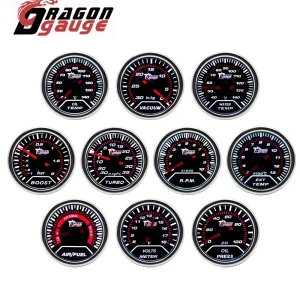
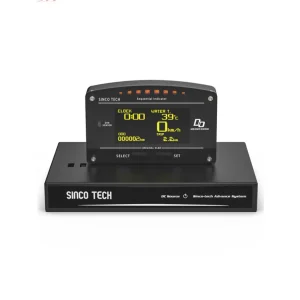
In the United States, the 85mm (3.375-inch or 3-3/8") instrument mounting standard serves as the operational baseline across major commercial sectors. This specific form factor is not merely a styling choice; it is deeply embedded in the design architectures of heavy-duty Class 8 trucks, agricultural machines (John Deere, Case IH configurations), off-highway vehicles, and marine dash consoles. Whether upgrading an interstate haulage fleet or retrofitting high-torque marine systems for the Great Lakes shipping routes, 85mm remains the definitive mechanical configuration.
US procurement managers face unique regional demands. These include complying with Federal Motor Vehicle Safety Standards (FMVSS), managing wide operating temperatures ranging from extreme Alaskan sub-zero zones to the desert heat of Arizona, and resisting intense vibration patterns typical in Class II-VIII industrial machinery. As the demand moves from mechanical gears to solid-state digital telemetry, acquiring reliable 85mm instrumentation systems requires suppliers with mature manufacturing bases and specialized engineering designs.
Saltwater-resistant IP67 sealing with anti-fogging curved glass. Supports NMEA 2000 communication protocol interfaces to monitor critical engine statistics in commercial vessels operating along the Gulf Coast and Pacific Northwest.
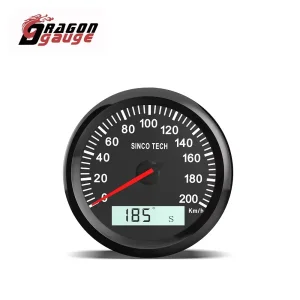
Precision 85mm GPS Speedometers and Tachometers designed for long-haul trucks. Features high-speed satellite signal acquisition to resolve signal loss issues under dense urban highway overpasses.
Supplying specialized automotive builders and industrial equipment fabricators with configurable multi-color backlit displays, enabling seamless matching with heritage designs or modern visual formats.
Modern instrumentation is shifting from analog sensor lines to microprocessor-driven CAN bus networks. Traditional mechanical speedometers required physical drive cables, which were prone to wear and mechanical drag. Current designs use multi-constellation GPS/GNSS sensor modules (DO917 series) to calculate speed over ground (SOG) with millisecond-level update rates, bypass mechanical wear, and eliminate the need for complex tire-calibration protocols.
The underlying technology consists of three primary layers:
| Feature Spec | Legacy Mechanical / Analog | Modern GPS & Digital (DO917 / DO921) | US Industry Compliance Standard |
|---|---|---|---|
| Signal Input Source | Mechanical Cable / Pulse Generator | Integrated GNSS Receiver / OBDII Bus | SAE J1939 / NMEA 2000 Compatible |
| Operational Accuracy | ±3% to 5% typical variance | ±0.1 km/h (Steady-State GPS lock) | FMVSS 571.127 Metrology Standards |
| Calibrating Protocol | Manual pulley & drive-gear adjustment | Plug-and-play auto calibration via satellite | Zero configuration overhead for fleet deployment |
| Environmental Rating | Open venting, high moisture vulnerability | Fully sealed IP67, double-layer anti-fog lens | ASTM B117 Salt Spray & Vibration ISO 16750 |
Established in 1986, delivering automotive and marine instrumentation for over 38 years.
Since 1986, DongOu Automobile Meter Factory (operating under the global performance brands SincoTech and GragonGauge) has been at the forefront of precision engineering for vehicle information systems. Through our joint research programs with Australian engineering partners, we have optimized our instrumentation platforms to meet the strict design standards demanded by high-level racing circuits and commercial operators alike.
We operate out of a modern manufacturing facility equipped with advanced automated surface mount technology (SMT) lines, precise automated optical inspection (AOI) workstations, and environmental chamber testing setups. This allows us to scale production efficiently while maintaining tight quality control limits.

US buyers often choose between onshore boutique manufacturers with high production costs and offshore supply chains that lack structural engineering support. DongOu bridges this gap. By operating our production facilities directly in China's industrial manufacturing hubs, we optimize raw material procurement, PCB fabrication, and plastic injection molding workflows to lower overall costs.
This localization provides clear supply chain advantages for US distributors and OEMs:
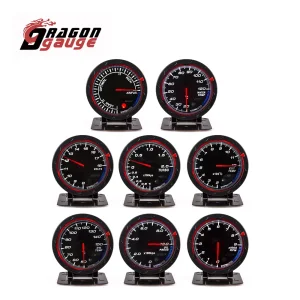
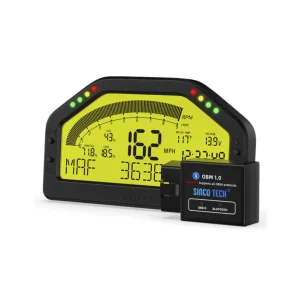
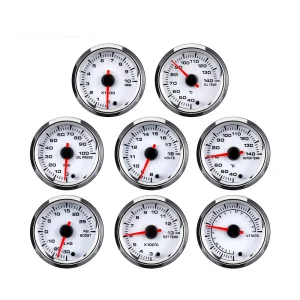
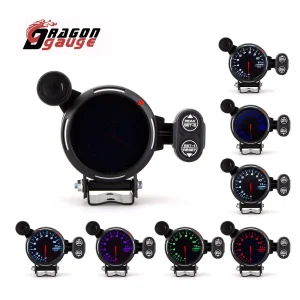
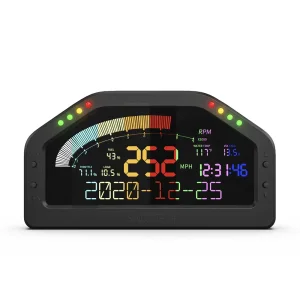
Explore our full line of performance and commercial instruments, including specialized OBDII bluetooth-linked dashboards and multi-gauge configurations.
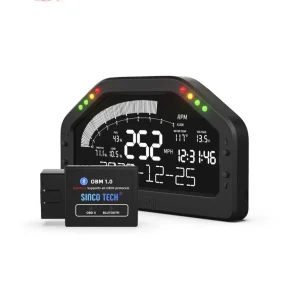
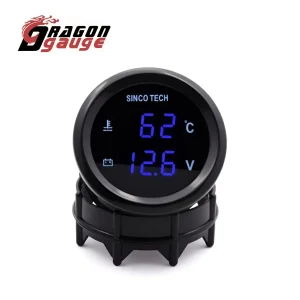
Ensuring our systems meet domestic US electrical and metrology standards for seamless integration into commercial fleets.
Our 85mm GPS speedometer systems comply with Federal Motor Vehicle Safety Standard 101/127 requirements. This ensures accurate speed measurement for commercial operations and heavy vehicles, reducing fleet liability.
Equipped with internal protection circuits to prevent damage from power surges. Complies with SAE J1113 requirements, shielding the system from interference caused by heavy alternators, radio transmitters, and heavy equipment electronics.
 Dongou