Explore our elite range of calibrated sensor kits, multi-function dashboards, and digital instrumentation systems engineered for racing, modification, and industrial applications.
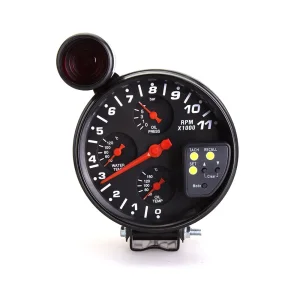
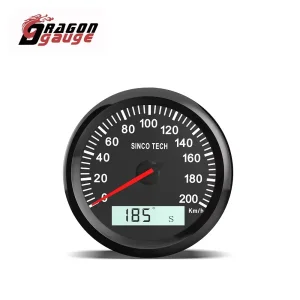
In the modern automotive performance, tuning, and industrial combustion sectors, monitoring the exact Air-Fuel Ratio (AFR) is paramount. Traditional narrowband sensors only determine whether a engine is running richer or leaner than the stoichiometric point (14.7:1 for gasoline). Wideband oxygen sensors, conversely, provide a linear current output proportional to the exact Lambda value across a massive operational envelope.
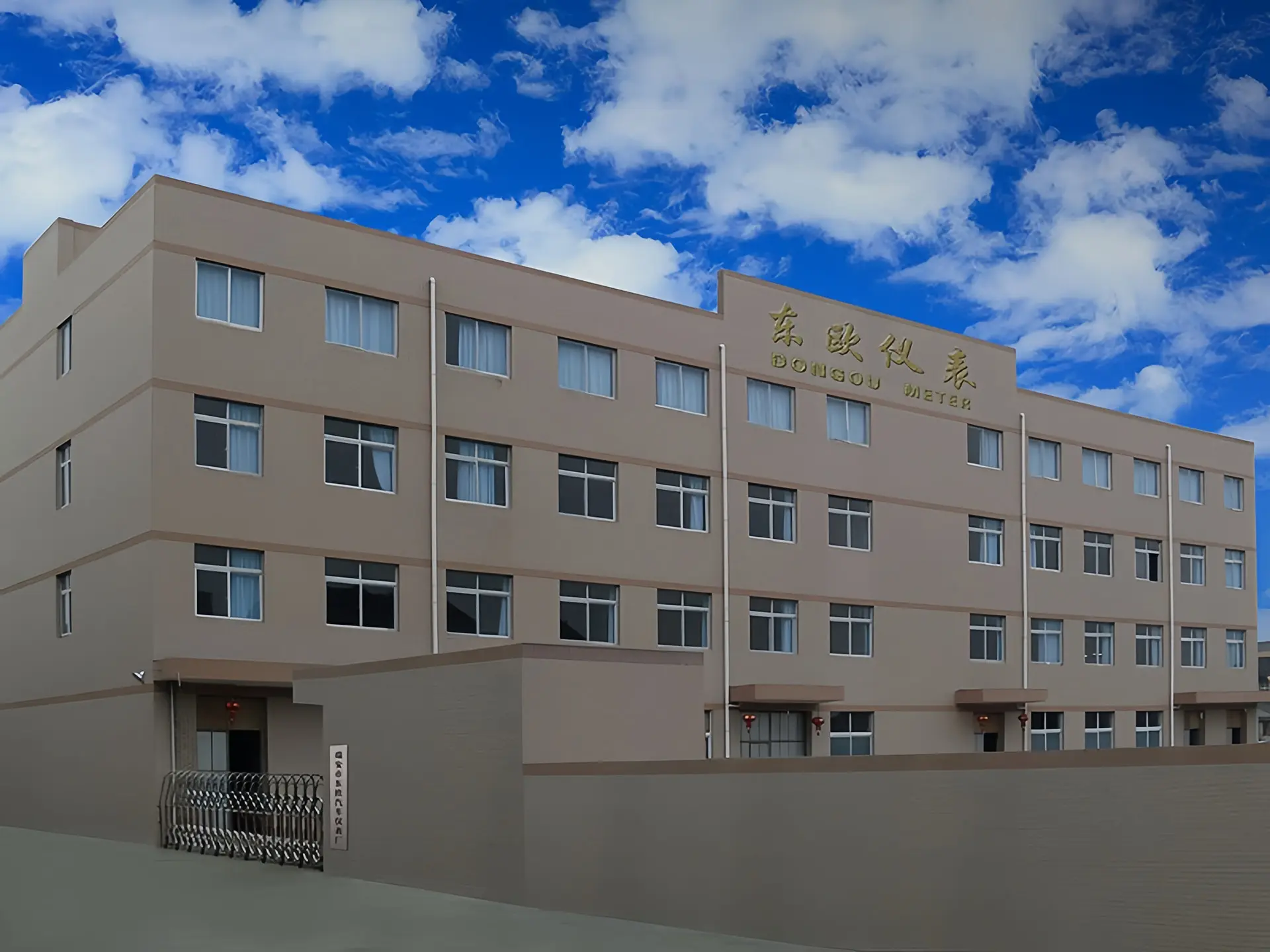
As a premier wideband sensor factory, Ruian DongOu Automobile Meter Factory (established in 1986) designs, calibrates, and manufactures multi-layered planar zirconia elements. These elements allow developers, OEM engineers, and tuning shops to extract peak thermodynamic efficiency, meet stringent environmental compliance, and ensure structural durability of internal combustion engines.
Unlike binary zirconia sensors, a wideband sensor utilizes an advanced dual-cell configuration. At its core, the sensor integrates a Nernst concentration cell and an oxygen pump cell separated by a micro-thin diffusion gap. By applying an electrical current to the pump cell, oxygen ions are actively shuttled into or out of the diffusion gap to maintain a constant Nernst voltage of 450mV. The magnitude and direction of this pump current ($I_p$) map directly to the lambda value.
"The engineering complexity of wideband sensor manufacturing lies in calibration. A variance of even 0.5 microns in the planar diffusion slot can shift the calibration curve by 15%, rendering high-end ECU maps inaccurate. Our cleanroom facilities employ laser ablation and ceramic co-firing to eliminate variations."
DongOu’s technical roadmap centers on the integration of wideband sensors with state-of-the-art ASIC control units (such as the Bosch CJ125 or custom-engineered equivalent processors). This ensures temperature-controlled stability, rapid response times (under 100 milliseconds), and resistance to thermal shock caused by condensed water droplets in cold exhaust systems.
| Feature Parameter | Traditional Narrowband Sensor | SincoTech DO926WB Wideband Kit | Industrial OEM Planar Sensor |
|---|---|---|---|
| Measurement Range | 0.97λ to 1.03λ (Switching) | 0.65λ to 2.0λ (Linear Continuous) | 0.50λ to Air (Full-Spectrum) |
| Output Signal | 0 - 1V Non-linear Voltage | Digital CAN-bus / 0-5V Analog Voltage | Variable Pump Current ($I_p$) |
| Heater Warm-up Time | 20 - 30 seconds | < 10 seconds (Smart PWM Preheat) | < 8 seconds |
| Operating Temp. Limit | 850°C | 1030°C (High-Alumina Ceramic) | 1050°C |
| Application Profile | Standard passenger cars (Closed loop) | Professional Motorsports & Tuning | Gen-Sets, Marine, and Dyno Labs |
How Tier-1 automotive procurement agents and motorsport manufacturers optimize their supply chains through strategic sourcing.
Global buyers need M18x1.5 standard threading alongside custom flange configurations for marine and motorcycle manifolds. DongOu accommodates specialized materials like Inconel or high-durability stainless steel housings for corrosive fuel applications.
Motorsports utilize leaded race fuel, which quickly poisons standard commercial wideband sensors. DongOu’s specialized planar coating technology adds a protective barrier on the Nernst cell, extending sensor lifespan by 200% under harsh fuel chemistry.
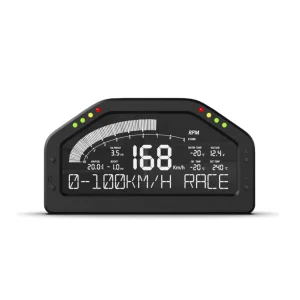
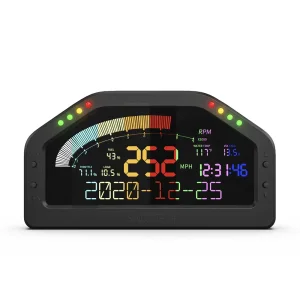
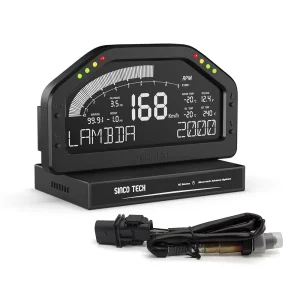
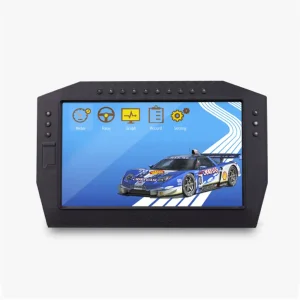
A sensor is only as good as its electronic control interface. We manufacture plug-and-play harness bundles that calibrate the wideband sensor directly to our flagship dashboards, including the SincoTech DO926WB digital race display system.
While aftermarket car tuning is a massive market, custom wideband sensor applications span multiple global industries. Industrial combustion management relies heavily on precise feedback loop systems. In large-scale stationary power generators, minimizing fuel consumption while keeping emissions below local thresholds requires robust, long-term continuous lambda measurement.
Furthermore, marine engines experience dramatic changes in thermal and atmospheric pressures. A standard automotive sensor fails in these marine exhaust systems due to water ingress and high humidity. Our factory engineers hermetically-sealed connector assemblies and dual-layer protective sensor shields specifically for marine power units.
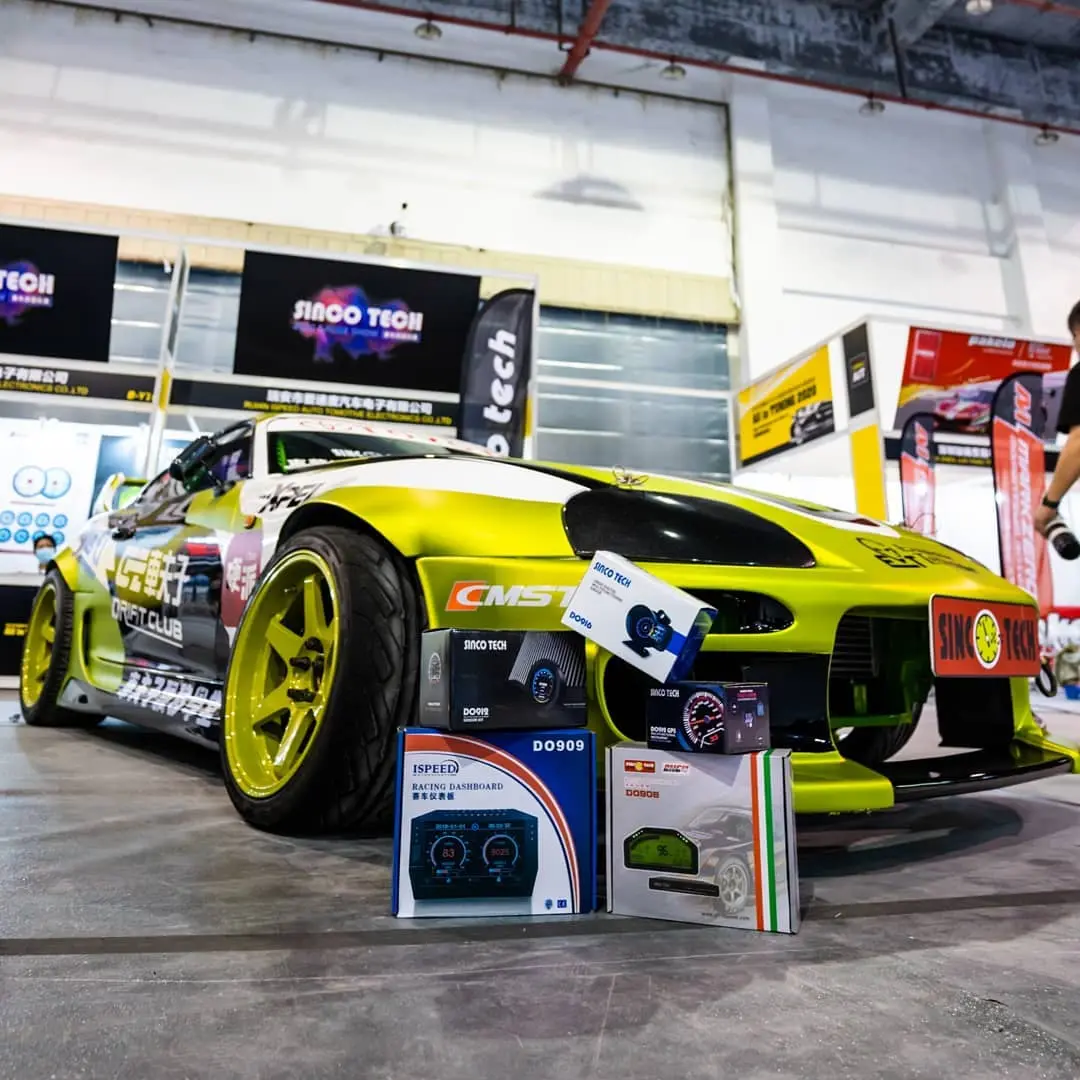
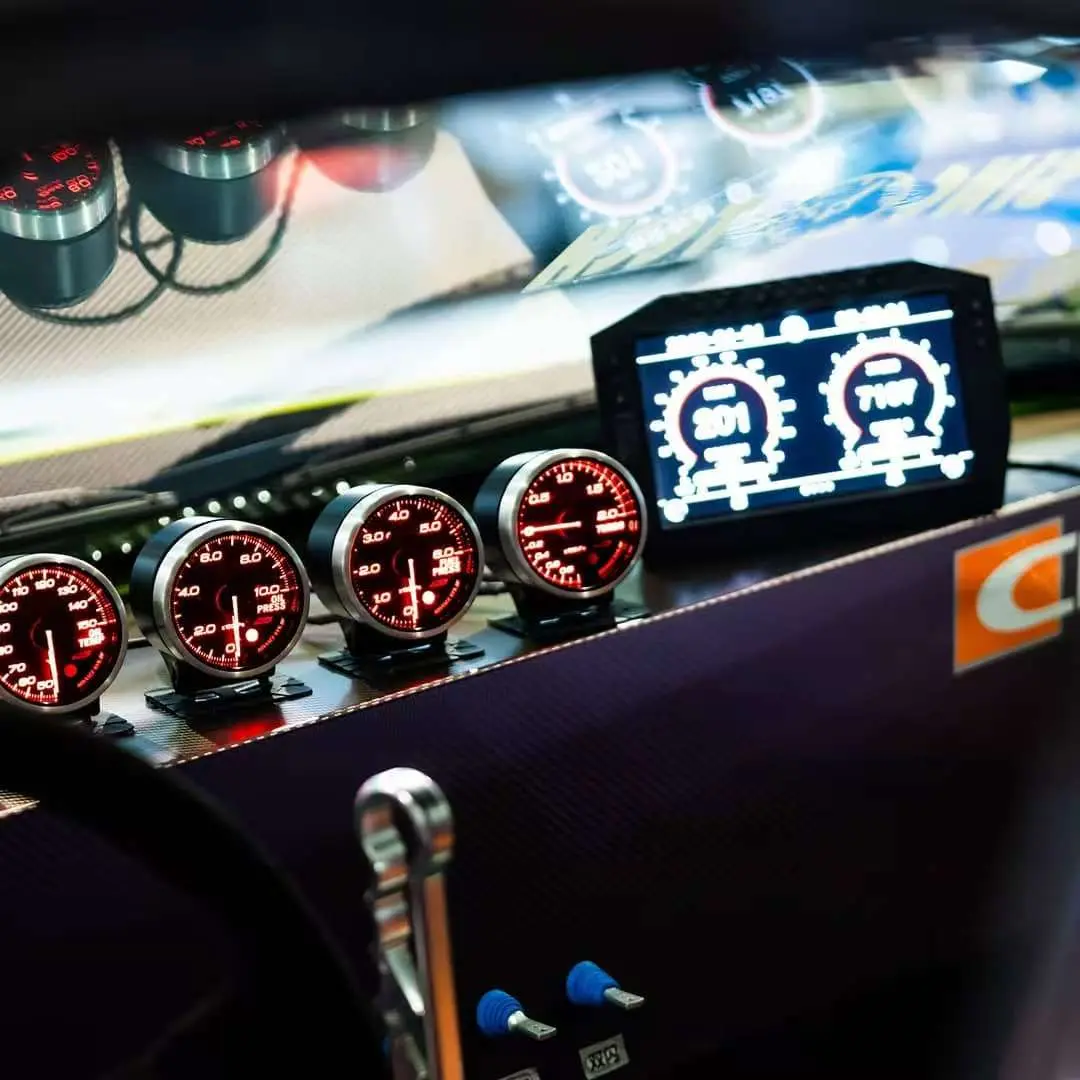
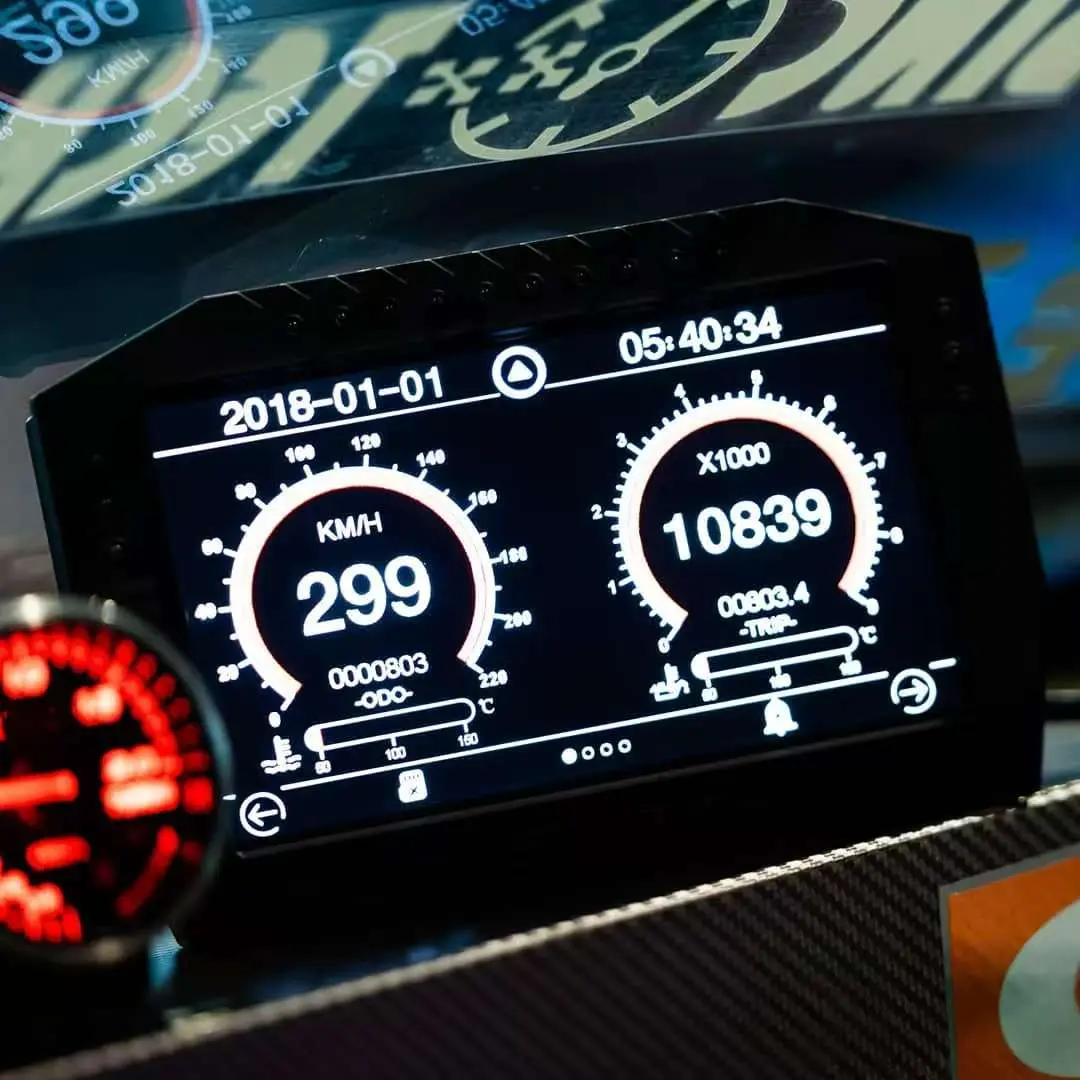
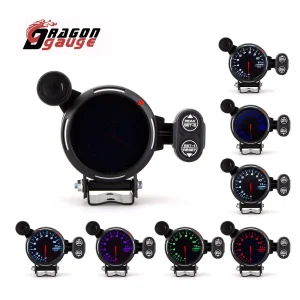
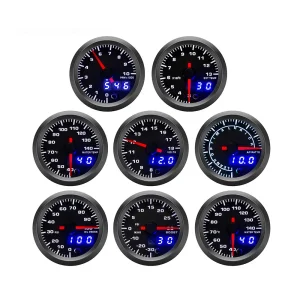
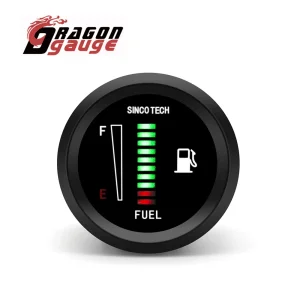
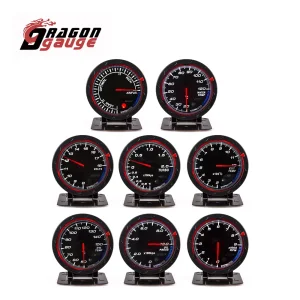
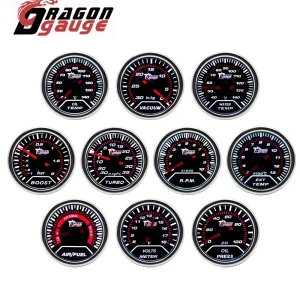
Ruian DongOu Automobile Meter Factory leverages its two premium brands to handle both sides of the market. SincoTech supports high-end racing vehicles with precision instrument panels that gather and process critical sensor parameters. Simultaneously, GragonGauge covers cost-effective, high-visibility modified instruments (including water temperature, oil temperature, oil pressure, boost gauges, voltmeters, and air-fuel ratio gauges) in standard configurations like 52mm, 60mm, and 85mm.
How our 38-year legacy translates into reliable, fail-safe hardware for global markets.
Sensors are rapidly heated to 950°C and then hit with liquid water spray. This ensures that the co-fired ceramic layers do not micro-fracture under harsh condensation scenarios in cold-start cycles.
Motorsports exhaust manifolds generate massive vibrational stress. We test all sensor bodies and internal ceramic elements on shake tables simulating up to 30G loads across wide frequency bands.
Every wideband system, including the SincoTech DO926WB display kits, undergoes a strict gas calibration procedure before packaging, validating the exact voltage-to-lambda transfer curve.
The next step in the development of oxygen sensors is the transition from analog output to digital CAN-bus communication. Analog 0-5V signals are susceptible to ground loops, electromagnetic interference (EMI) from ignition coils, and voltage drops along long wire runs.
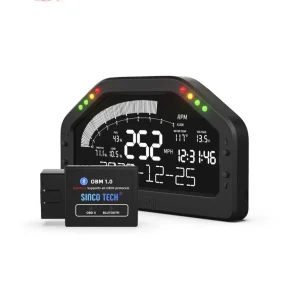
Our engineering team is actively developing direct CAN-bus integrated wideband sensor modules. By placing the digitization and calibration processor directly on the sensor connector, the sensor streams high-fidelity digital Lambda packets directly to the vehicle's ECU or the SincoTech DO922 Bluetooth dashboard. This architecture eliminates noise, increases refresh rates to over 200 Hz, and allows multi-sensor daisy chaining for individual cylinder trimming.
Direct answers from our engineering team regarding design, ordering, calibration, and integration.
Discover our custom dashboards, GPS speedometers, and comprehensive multi-sensor integration platforms.
 Dongou