Wholesale Air Fuel Ratio Gauge Suppliers & Factory

Industrial-Grade Precision Instruments, Dual-Brand Engineering Systems, & Worldwide Performance Supply Chains

The Evolution of Engine Tuning: Air-Fuel Ratio (AFR) & Lambda Analysis

In the modern automotive performance and industrial powertrain sectors, monitoring combustion chemistry with sub-millisecond precision is not merely a custom feature—it is a critical requirement for survival, power efficiency, and environmental compliance. Sourcing wholesale Air Fuel Ratio (AFR) Gauges requires deep insight into sensor architectures, calibration limits, signal delays, and mechanical design limitations. Whether retrofitting classic high-power engines, tuning racing vehicles, or engineering heavy-duty gensets, selecting the right instrumentation manufacturer determines if an engine runs at maximum power or faces catastrophic pre-ignition failure.

What is stoichiometric ratio? For standard gasoline, the stoichiometric point is 14.7:1 (Lambda 1.0). A lean mixture (higher than 14.7) improves fuel economy but drastically increases combustion temperatures, which can melt pistons. A rich mixture (lower than 14.7) cools the chamber but wastes fuel and causes carbon buildup. Precise AFR gauges provide real-time data to help operators balance these factors.

Narrowband vs. Wideband Technology: Understanding the Operational Distinction

When purchasing bulk instruments, B2B buyers must distinguish between Narrowband and Wideband configurations. Narrowband AFR meters function within a tight margin, outputting a 0-1V signal. They indicate whether the mixture is richer or leaner than stoichiometry but lack the resolution to detail exact fuel deviation. This setup is suitable for stock commuter cars running closed-loop configurations under basic driving conditions.

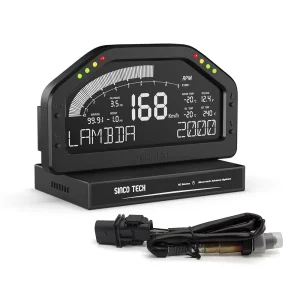
In contrast, Wideband AFR Systems (utilizing advanced planar sensors like the Bosch LSU 4.9) deliver a 0-5V analog output or a digital CAN-bus signal. This allows measurements across a broad spectrum of lambda values (from 0.65 to air reference). For tuning high-boost forced induction engines or running alternative fuels like E85 (stoichiometric at 9.76:1), wideband instrumentation is necessary to prevent lean spikes under high loads.

Ruian DongOu Automobile Meter Factory: Legacy, Innovation, and Dual-Brand Ecosystem

Established in 1986, Ruian DongOu Automobile Meter Factory has accumulated over 38 years of experience in custom automotive instrumentation manufacturing. Our facility integrates precision injection molding, electronic circuit board mounting, calibration testing, and assembly systems.
Our manufacturing operations are divided into two specialized brands:

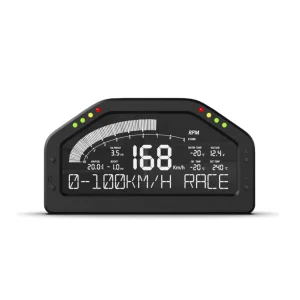
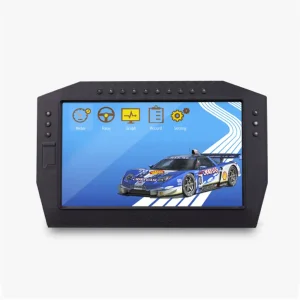
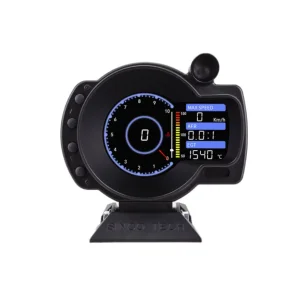
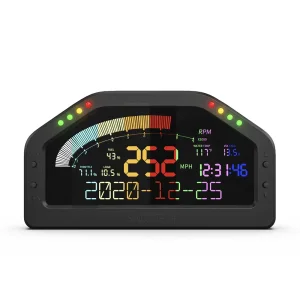
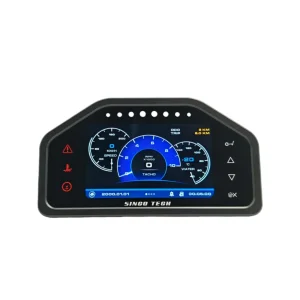
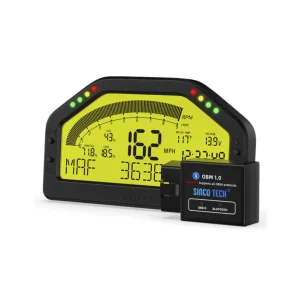
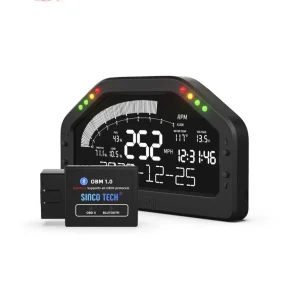
  • SincoTech: Engineered in collaboration with partners in Australia, this high-end brand specializes in high-precision, multi-parameter racing dashboards. These instruments integrate GPS data acquisition, Bluetooth connectivity, OBDII processing, and wideband oxygen sensor kits to meet demanding track standards.
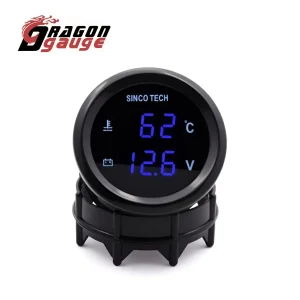
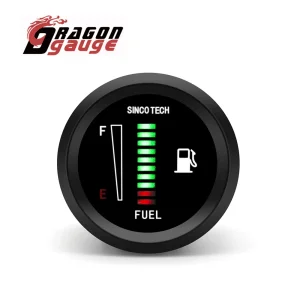
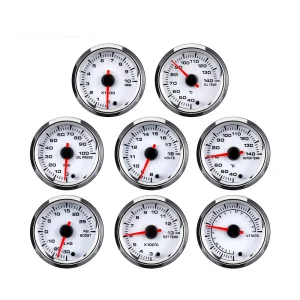
  • GragonGauge: Focused on versatile aftermarket custom installations, this brand features standalone analog and digital gauges. The catalog covers 52mm (2 inches), 60mm (2.36 inches), and 85mm (3.75 inches) sizes, including boost gauges, oil pressure sensors, exhaust gas temperature (EGT) meters, and customizable air-fuel ratio displays.

Global Procurement Criteria

  • Sensor Quality: Integration of high-temperature Zirconia planar oxygen sensors for thermal shock resistance.
  • EMI/RFI Shielding: Internal PCB layouts that shield signals from high-voltage ignition noise.
  • Custom Calibration: Adjustability for methanol, CNG, LPG, and ethanol mixtures in addition to gasoline.
  • Housing Ruggedness: Dust and moisture sealing (IP65 rating) to protect electronic components.

China Factory Operations & Assembly Efficiency

How our Wenzhou facility balances cost-efficiency with high-precision engineering standards

Ruian DongOu Automobile Meter Factory facility interior
Advanced Manufacturing and Quality Control in Wenzhou

Ruian, located within the Wenzhou automotive components cluster in Zhejiang, China, provides distinct supply chain advantages. This regional concentration enables us to source raw components—such as microcontrollers, stepper motor gears, high-temperature wire harnesses, and optical-grade acrylic lenses—efficiently.

Our factory utilizes automated Surface Mount Technology (SMT) lines to manufacture PCBs, reducing human error in micro-soldering. Each stepper motor is calibrated for speed and angle alignment. Before final packaging, our gauges undergo vibration simulation and thermal cycle tests (ranging from -40°C to 85°C) to ensure reliability under extreme conditions.

By combining localized material sourcing with automated assembly processes, we offer competitive factory-direct pricing for international custom instrumentation projects, maintaining low defect rates and consistent production quality.

1986
Year Established
38+
Years of R&D Experience
2
Core Brands (SincoTech / Gragon)
50+
Countries Exported To

Global Industrial Applications & Deployment

Precision performance instrumentation designed for diverse operating environments

Versatile Application Across Different Sectors

Our air-fuel ratio and performance gauges are utilized in a variety of sectors worldwide:
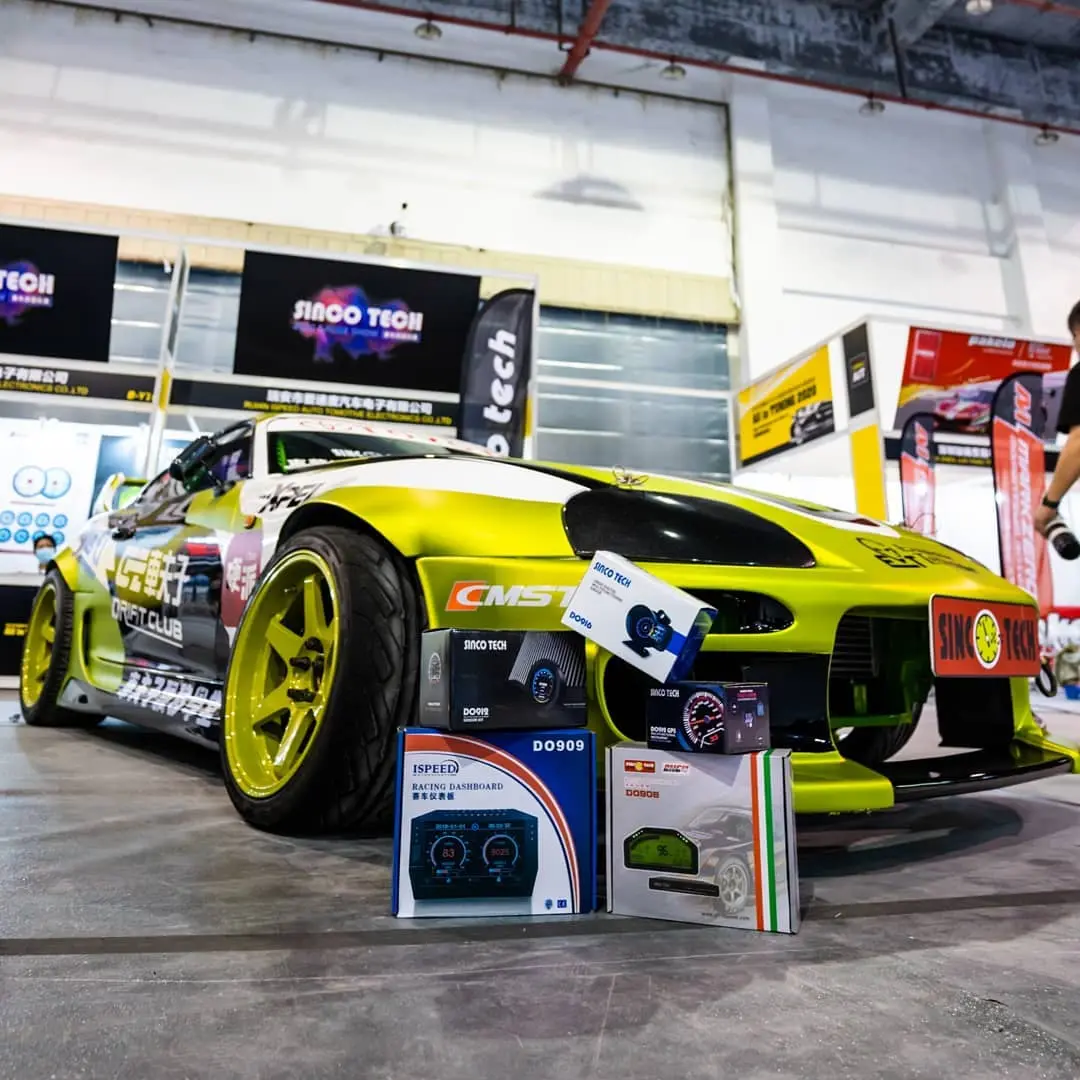
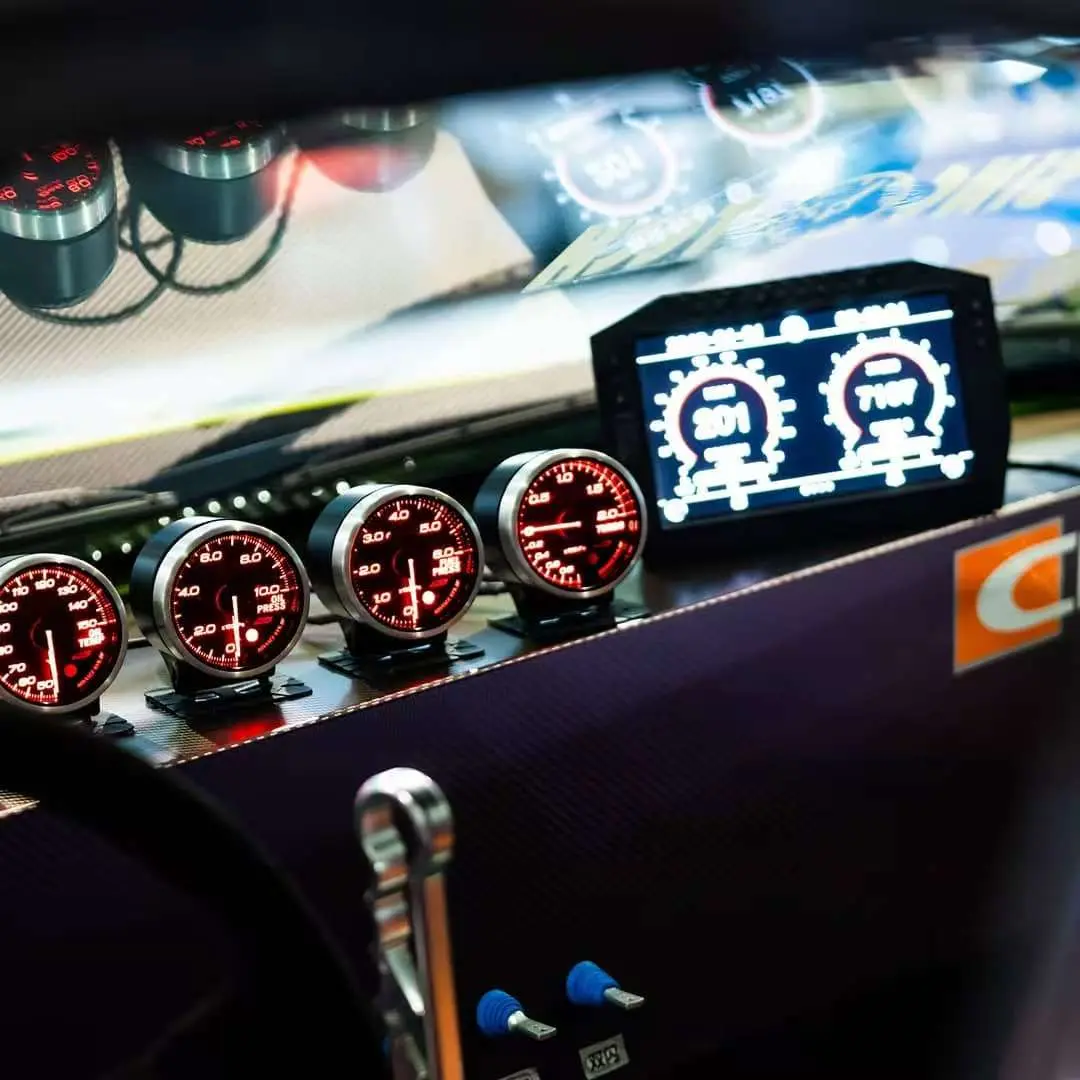
  • Automotive Tuning and Modification: Standalone dashboard installations (52mm and 60mm) allow real-time monitoring of custom turbochargers and superchargers, helping tuners calibrate aftermarket ECUs safely.
  • Professional Motorsports: SincoTech dashboards integrate multiple vehicle telemetry parameters via OBDII and CAN-bus networks, providing racers with consolidated engine data on one screen.
  • Commercial Generators and Power Systems: Stationary engine systems running on alternative fuels (such as CNG or biogases) rely on continuous AFR monitoring to optimize combustion efficiency and minimize exhaust emissions.
  • Marine Applications: Designed to withstand humid and corrosive marine environments, our gauges monitor air-fuel mixtures in high-performance powerboat engines.
Air Fuel Ratio gauge on modified car dashboard
Automobile meter assembly line visual inspection

Tailored Technical Customization (OEM & ODM)

Different markets require specific technical features. We offer comprehensive OEM/ODM customization services to adapt our gauges for localized needs:

Display Customization: Choose from high-contrast LCDs, organic LEDs (OLED), or traditional analog needles driven by high-speed stepper motors.

Signal Interface Configuration: We customize gauges to accept various signal types, including 0-5V analog, 0-1V analog, OBDII data streams, Bluetooth telemetry, or custom CAN-bus frames.

Aesthetic Customization: We support custom branding, unique dial faces, adjustable backlight color zones (such as 7-color LED switchable systems), and different housing depths to fit tight dashboard layouts.

Frequently Asked Questions (FAQ)

Answers to technical and B2B procurement questions about our gauges

What are the key technical differences between GragonGauge and SincoTech product lines?
GragonGauge focuses on standalone, analog-style performance meters (e.g., 52mm/60mm tachometers, boost, and AFR gauges) with switchable backlight options, ideal for standard aftermarket installations. SincoTech specializes in high-end, multi-parameter digital race dashes (using LCD/OLED screens) that consolidate data from various sensors, OBDII interfaces, and Bluetooth connections into a single display.
Can your Air-Fuel Ratio Gauges read alternative fuel types?
Yes. While the default calibration is set for standard gasoline (14.7:1 stoichiometric point), our wideband controller models can be calibrated to read Lambda values directly. This makes them compatible with alternative fuels like ethanol (E85), methanol, LPG, and compressed natural gas (CNG).
What custom branding and OEM options do you offer for bulk orders?
We provide comprehensive custom logo printing on gauge faces, customized startup screen logos for digital displays, specialized backlighting configurations, and tailored wire harnesses. We can also modify sensor input limits and scale ranges to match your specific engineering requirements.
How does your factory ensure the durability of gauges used in high-vibration environments?
Every gauge model goes through rigorous environmental simulation testing. This includes multi-axis vibration tables to replicate harsh road and track conditions, thermal cycle tests from -40°C to 85°C, and electrical surge protection checks to prevent component failure from unstable vehicle charging systems.
What is the typical production lead time for a wholesale order?
Standard OEM production cycles range from 25 to 45 days, depending on custom components and order volumes. Ready-to-ship standard products from our SincoTech and GragonGauge catalogs are typically dispatched faster, depending on existing factory stock levels.